Johnny Appleseed

The trees are magnificent standing guard over the old colonial, they are huge and dense evergreens with boughs and limbs draping to the orange soils of the farm. There are three of them, huge Magnolia grandiflora, or bull bay, more commonly known as the southern magnolia. They bloom creamy white saucer shaped flowers up to nine inches wide. They are native to North Carolina and are found south to Florida and west to Texas and Oklahoma. They have large dark green leaves that can be eight inches long and five inches wide with hard and heavy timber. The magnolia has been used to make furniture and veneer for doors and cabinets. But these trees, these three trees, they are special.
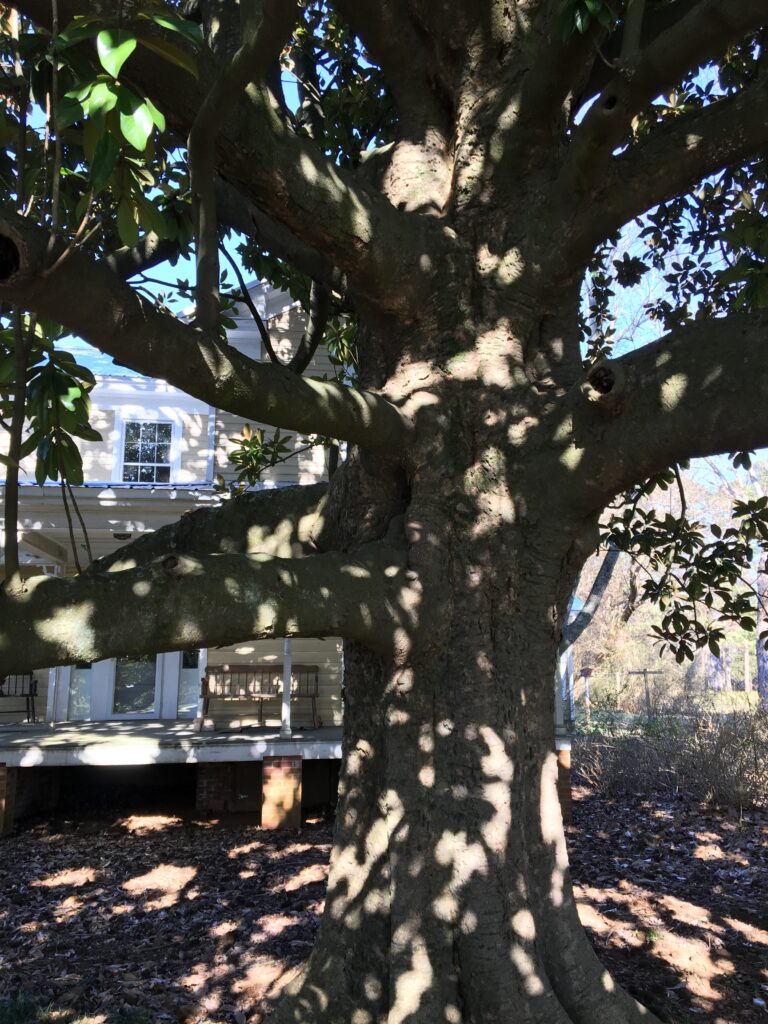
One of three big Magnolias in front of the old colonial.


As a small boy I remember sitting on my grandfather’s lap one evening. I was on a sleep over at the farmhouse he shared with my grandmother and I had crawled onto his lap while my grandmother cleared the dishes and fixed us all a small bowl of peaches for dessert. The sturdy upholstered chair held us both with ease as it sat squarely on the braided rag rug that wound around the living room. I was sitting sideways on his lap looking up under his chin playing with his waddle. He took my hand, stopping my play, and told me he was having Déjà Vu. He may not have used that term, I was too young to have known its meaning, but he might have, because in a way, he did not seem to be talking just to me.

He told me of sitting on his grandfather’s lap when he was a boy, much like we were doing that summers eve. He was playing with the skin of his grandfather’s throat where a wicked red scar raced across the side of his neck. His grandad told him he that back in the war he was fighting a Yankee, firing back and forth with a blue coat hiding across a small draw in a hardwood forest, all the while using a White Oak for cover. He stepped out to fire his muzzle loader and was struck in the neck by a musket ball. He was imprisoned in Pt Lookout, Maryland and walked home to that old colonial after the war.

My grandfather was rubbing that scar in his mind’s eye, while I was rubbing his neck in my Grandmother’s living room.

Late in 1865, after the Civil war the family story goes, a walking confederate soldier came to the house seeking food and shelter. My great great grandfather Thomas Foushee Hogan was there recovering from his grievous wound, but he gave generously food and let him camp and rest. The soldier was so appreciative of the care and help, he planted magnolia seedlings in the front yard, Johnny Appleseed style. Three tiny Magnolia grandiflora were put in the ground that day 156 years ago and I am here to tell you they are huge now. They provide care and shelter to the old colonial as they shade the home from the western sunset.
The Plants

3/14/2021 Although we are constantly surrounded by plants, they are living things that are easily overlooked since they don’t move, they simply exist, and they are abundant. I am extremely interested in botany so I pride myself as someone who notices the plants most people ignore. I take walks on my farm, the trails breaching the borders of several different kinds of environments, from wetlands and streams, to forested areas, to pastures, and stop at every new plant, snap a picture and then identify it once I get back to the house. I have since learned a large collection of different plants and fungi, from beautiful showy flowers and bushes, to more subtle but still fascinating plants all of which reside on my farm in Southern Virginia.

During the fall I took a lot of walks and I quickly noticed a few plants that stood out. Strawberry bush was one I had never seen before. It immediately caught my attention since the fruiting bodies are bright fuschia with hanging orange seeds that are just as beautiful as a flower and don’t resemble anything I can think of, they are just strange structures. The Strawberry bush I found was spindly without leaves and around 6 ft tall. The fruiting bodies almost resemble christmas ornaments.

Throughout the summer there were, of course, the showy flowers like Black Eyed Susans, Queen Anne’s Lace, Goldenrod, and Milkweed, but one day when walking in the forest, the heat suffocating, I noticed a funky looking flower that resembles those carnivorous flowers you think only appear in tropical rainforests\. It was Jack in the Pulpit, a pitcher shaped flower that attracts flies for pollination and sports bright red berries tucked away on the forest floor, hidden away by its three large leaves. I would have missed it if not for the deep dark purple stripes going from the top to the bottom of the flower.

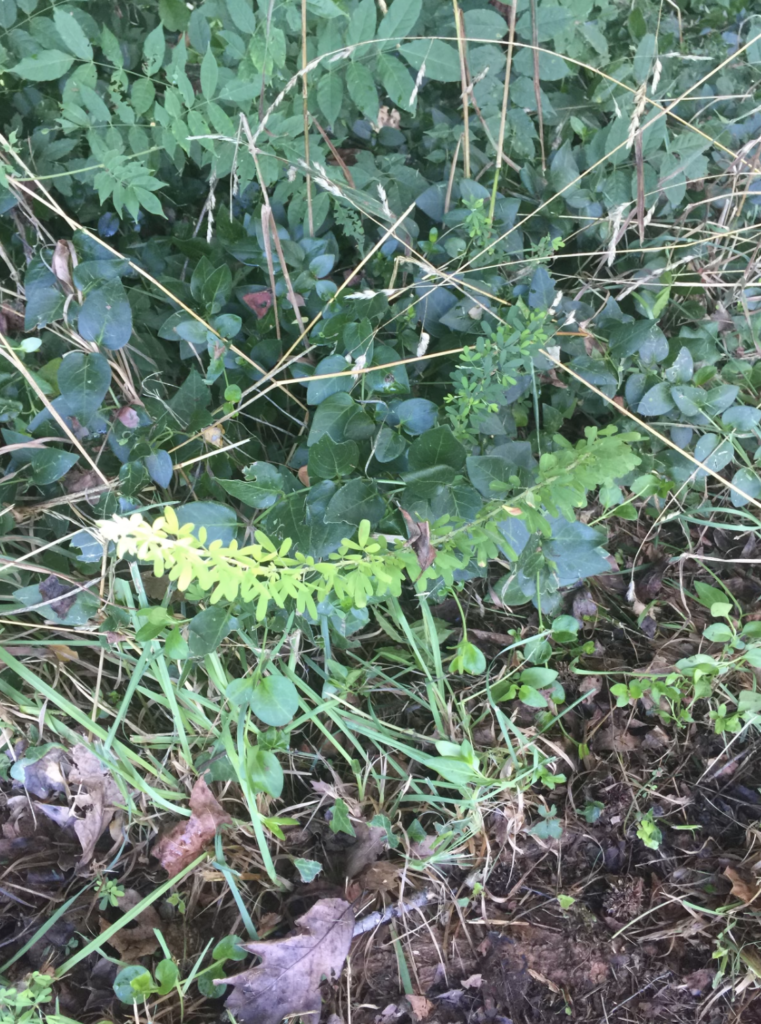
There are also tons of medicinal plants on my farm, such as Mountain Mint which can be good for menstrual cycle regulation, a plant that has the distinct menthol smell and taste of every mint plant, and it prefers to grow along the edge of our forests. I can spot it from far away as the leaves are sometimes covered in a silvery powder and have delicate purple flowers that bees love. Another plant with silvery leaves is Jewelweed, a very well known “cure” for poison ivy. It’s much more delicate than the sturdy mountain mint, and prefers moist environments right next to streams. In the spring, delicate  spotted orange flowers bloom that attract butterflies. The cool thing about Jewelweed, is that if you try to dunk it in water, there is a coating on each leaf that repels water like a solid silvery force field. It also has spring loaded seeds that shoot at you if you brush up against them like miniature cannons.

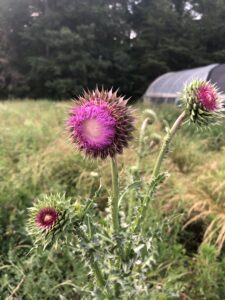
Lastly we have invasive plants. The plants that takeover with very little control, plants like Thistle or Johnson grass, the bane of my Mom’s existence, that have large seed heads and deep tap roots making it impossible to kill and stay killed, because if you leave even one tiny piece of tap root you are going to see it again in a few months. The tap roots can go a foot or more in the ground and usually break off if you try to pull them. The grass towers above your head, and yes, it is beautiful, with the purple tint and sturdy stem and the beautiful sound it makes when it sways in the wind, or thistle which creates a beautiful pink flower, although not conventionally beautiful, and painful to touch because of the thorns, it is not worth keeping, because once you have it, it won’t go away. Sometimes I wish I was as persistent as Johnson grass.

Purple Thistle
Purple Thistle

Glaettli, Repp. Piedmont Native Plants: a Guide for Landscapes and Gardens. Piedmont Natives, 2013. https://static1.squarespace.com/static/58e25c41e6f2e17ea4cb7766/t/5c7e9fdceef1a1aa5076c56b/1551802341422/Piedmont+Native+Plant+Guide+-+April+2016.pdf 

Mahr, Susan, Written by. “Jewelweed, Impatiens Capensis.” Wisconsin Horticulture, hort.extension.wisc.edu/articles/jewelweed-impatiens-capensis/. 

TWC, Staff. “Euonymus Americanus.” Lady Bird Johnson Wildflower Center – The University of Texas at Austin, 2018, www.wildflower.org/plants/result.php?id_plant=euam9. 

TWC, Staff. “Arisaema Triphyllum.” Lady Bird Johnson Wildflower Center – The University of Texas at Austin, 2013, www.wildflower.org/plants/result.php?id_plant=artr. 

The Big Rock

3/14/2021

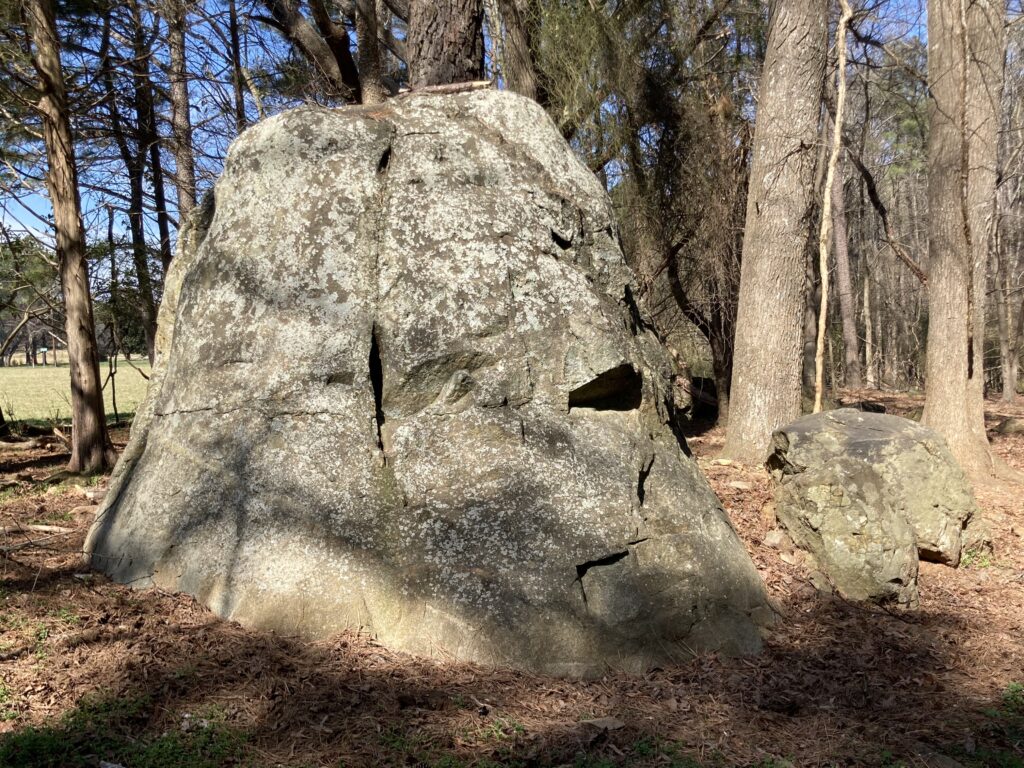
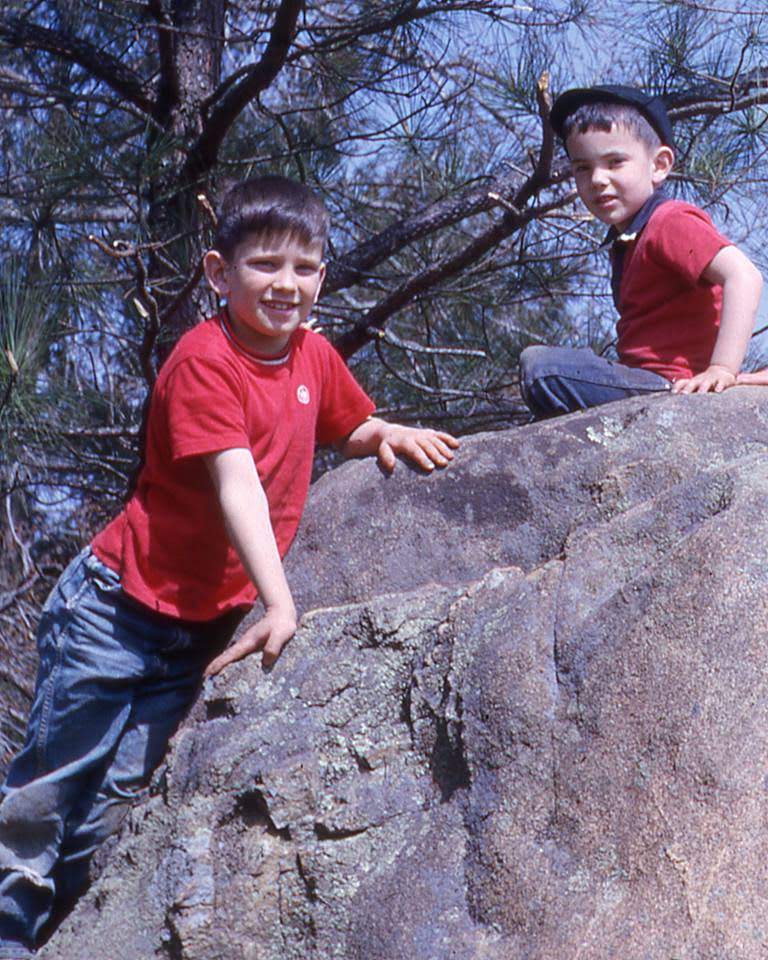
Exploring the woods around the airport I found a big rock. Not at all a small rock but a big one. I knew it was in the woods to the east of the airport hangar, I remembered it from my childhood. Our family always called it the Big Rock. So I went looking for it.

My cousin Rob Hogan on the left. I am on the right, King of the Hill! Photo by Bob Hogan circa 1964

I had always assumed and imagined the Big Rock traveled a great distance from the north on the back of a glacier whose icy tentacle placed it just so, then left it to cook in the Piedmont heat like a lump of sourdough, before racing back north, melting in the rising heat.

Boy was I wrong.

I spoke with a friend of mine who studied archeology in graduate school and showed him the Big Rock. When I shared with Chris Senior my suspicions of how the Big Rock got here, its imaginative journey, he did a big eye roll.  “No Don, the glaciers did not come this far south. This rock has been pushed up from below.” Evidently the big granite bolder was part of molten rock way below our feet and pushed up by volcanic activity hundreds of millions of years ago. And, he went on to say that likely the Big Rock was the tip of the iceberg, so to speak, and that this was a tough little nugget that erosion was still working on. “Little nugget” may be a stretch, I thought, the Big Rock is huge.

Standing over 8 feet high and with a circumference of over 40 feet, putting the diameter at the base least 12 feet or more, this is one Big Rock!

The circumference is almost 40 feet and if I did my math right that would put the diameter over twelve feet. It is over eight feet tall, and by any measure a Big Rock. “I am not a geologist” Chris qualified, “I may be wrong, but I doubt it. Native peoples would have used this rock as a meeting place, a road side attraction of sorts. They all would have known of this rock and how to get here.” Can you imagine, the plans made through millennium to meet at the Big Rock where Chris and I were standing today? I could. It had been the case in my childhood.

The Occaneechi, Haw, and Eno were early people to live near the Big Rock and the airport I know and love. I am sure many footpaths and trails crisscrossed the farm. As European surveyors and explorers traversed North Carolina in the early 1700s, John Lawson met the Occaneechi tribe in 1701. Maybe they met at the Big Rock? I don’t know if they did or didn’t but according to what I learned from my friend Chris, they just might have. My understanding of the Big Rock has changed and my imagination has too.

Yes, I am sure they met there.

Gardens – 555

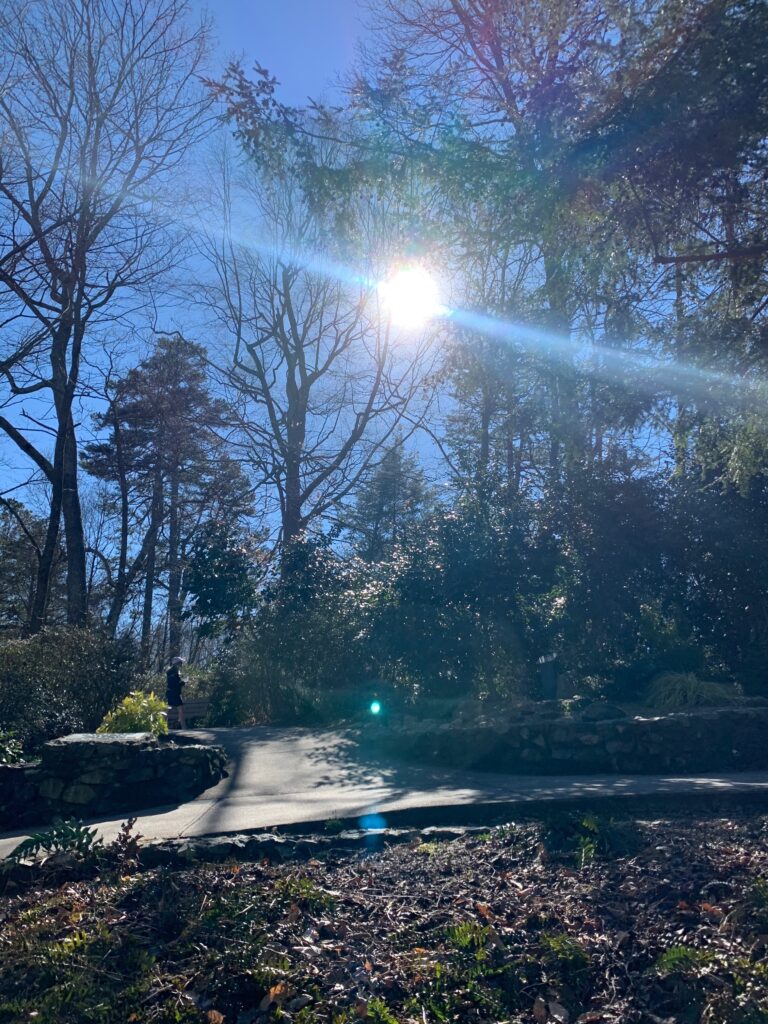
Bicentennial Gardens (picture taken by me)

Birds chirping. Touching flower petals. Sunshine shining on my skin. Crisp air. The smell of fresh water and moist soil. The 5 senses.

As I was walking around the Bicentennial gardens, I was trying to take in all 5 of my senses.

Recently, 555, has been appearing in my life. The angel number 555 spiritually represents the being in true sync with yourself. It also symbolize’s change. Change is something apparent in my life currently, as I am in a transition of beginnings and endings. Graduating college, moving, transitioning, adapting, growing, learning, living, in the midst of a pandemic. I’d say thats a lot of change going on.

Although in the midst of change, I have found that the more things change, the more they do stay the same.

The more you go through life, the more you are brought back to your roots and your passions.

***********************************************************

The 5 senses are sound, touch, sight, smell, and taste. On this particular day I paid attention to each one of my senses as I was walking around.

  1. Sounds:

In the gardens, I heard birds chirping, cars going by, leaves and tree branches rustling in the wind. I heard people chattering as they walked by on the various paths through the garden.

2. Touch:

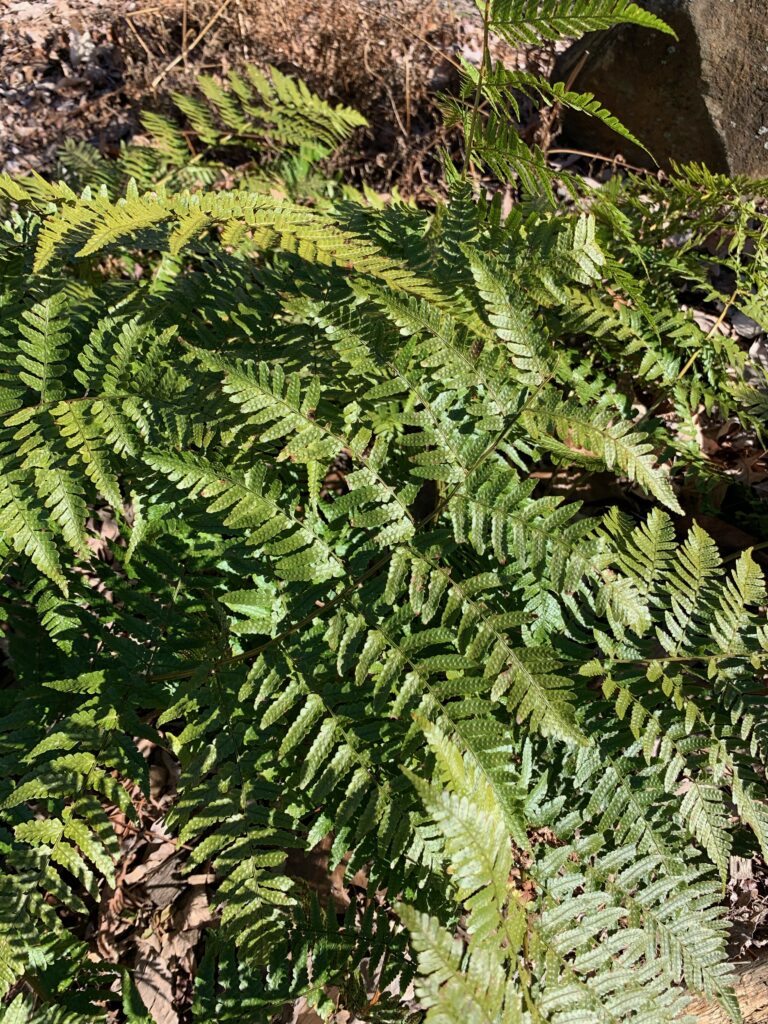
As I walked throughout the gardens, I touched a nearby fern leaf and felt the coarseness of the plant.

Fern plant (picture taken by me)

3. Sight:

The sunshine beaming onto you while simultaneously providing warmth, the temperature was low 60s with sunshine. The sky was clear blue -no clouds in sight. People walking by carrying conversations. Kids in strollers. As I was sitting on a bench my eyes finding glimpses of all the wildlife such as birds, ants, and other little critters. I passed by a “new” mill but modeled to replicate an old mill.

The mill at bicentennial gardens (picture taken by google photos)

As we walked along the river bank we saw trees with giant, thick roots protruding out from the surface of the soil.

4. smell:

The smell of crisp air, moist soil, and honey suckles filled the air. It was slightly cold with some sun shining. The city air is more fresh.

5. taste

The taste of fresh water. The water you desire on a sunny afternoon. Also the water in the streams flowing into other mini pathways.

Taking in all 5 of my senses in the garden gave me the ability to clear my head and be present in the moment.

。・:*:・゚★,。・:*:・゚☆ K8 。・:*:・゚★,。・:*:・゚☆ 

Tree-Hearted

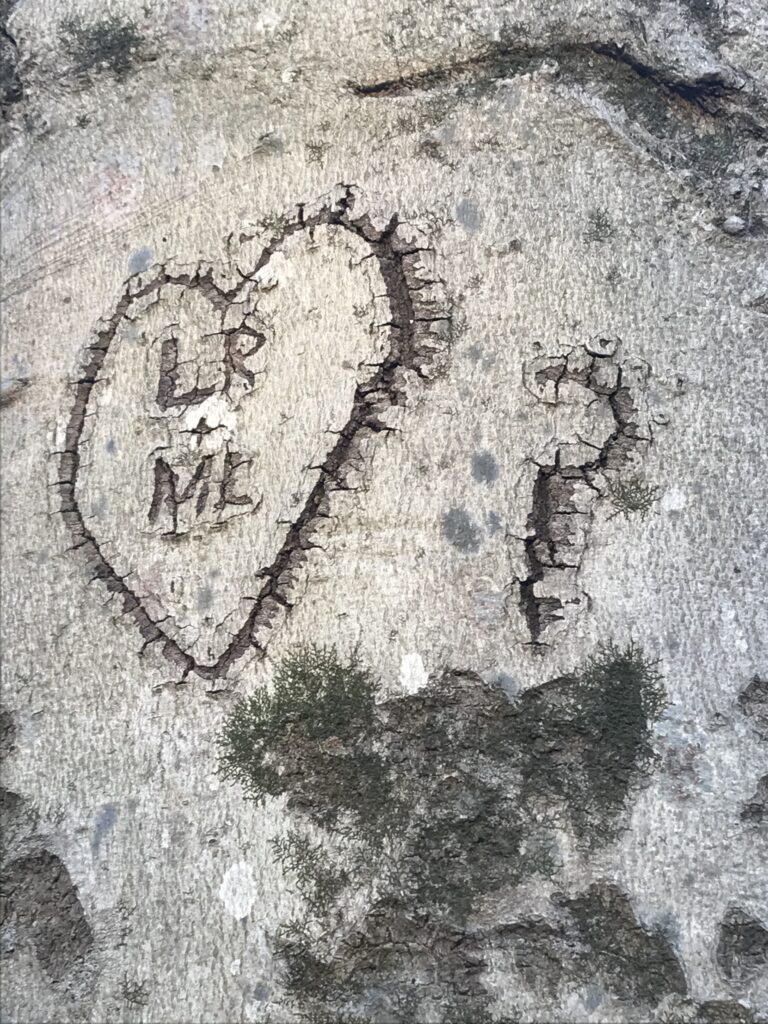
This time, my visit to the woods was more intentional. I wanted to go deliberately, and gain some deeper understanding of the history of the place along the way. Something that popped up frequently for me was carvings in trees. Hearts with initials were the most common, but there were other words and symbols left behind for posterity.

This one made me laugh, but also stop and ponder. Did someone add the “?” after the heart was there, in order to be funny? Did they not recognize the names? Or perhaps some infidelity was afoot. Gasp!

It occurred to me through these many tree-as-canvas examples that a key feature of human beings is our desire to leave a legacy. The sign at the entrance of the Woods, proclaiming its eternal place in the history of the Underground Railroad. The carvings on the trees to mark love that may be lost, or may continue to this day. Perhaps even the pieces of litter down by the lake are a cry out to be remembered.

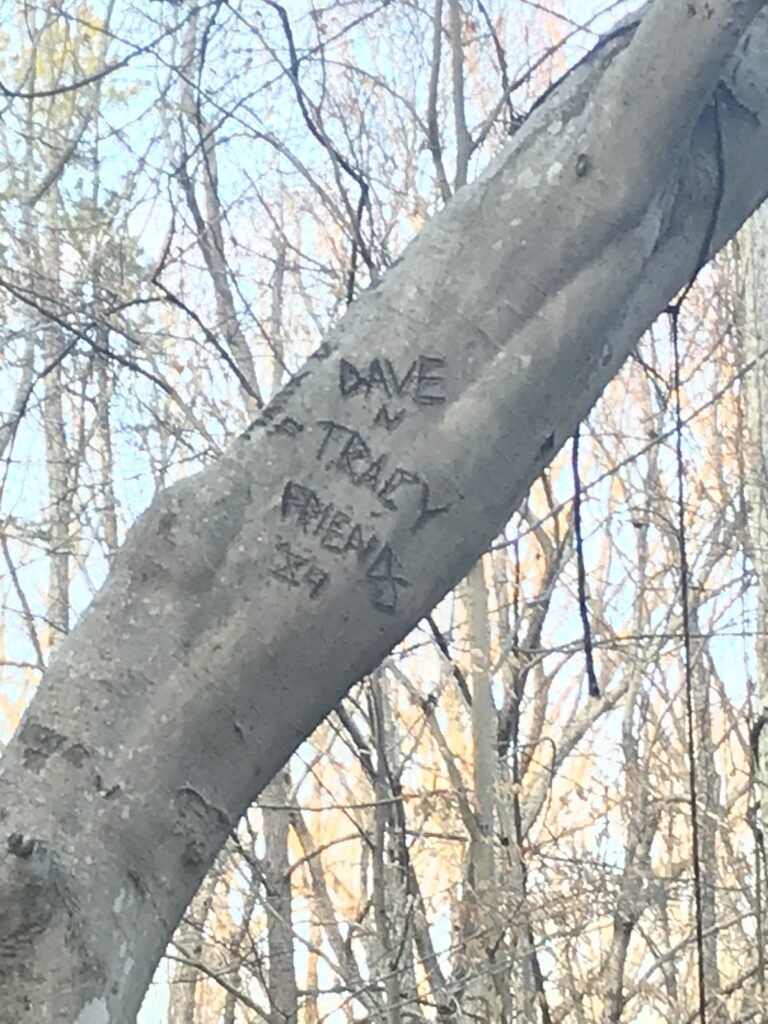
This one also set my mind wondering. Were Dave and Tracy declaring they were “just friends” with no romantic attachment, or that they were Friends with a capital F? Given the graduation year (at least I think it says ‘84, possibly ‘89) maybe Jim will know.

As Levi Coffin was growing up just north of these woods, with his Meetinghouse on the other side of them, he described them as a “refuge”. Certainly, that is an accurate name for them in the historical sense – but also in the personal and spiritual sense. In A Winter Walk, Thoreau offers the audience the chance to be cleansed by the purity of winter, by going out into the cold and snow that so many have hidden away from. But I believe that as the scope of rejection of nature has grown, so too has nature’s ability to cleanse us and free us from the weight of everyday life.

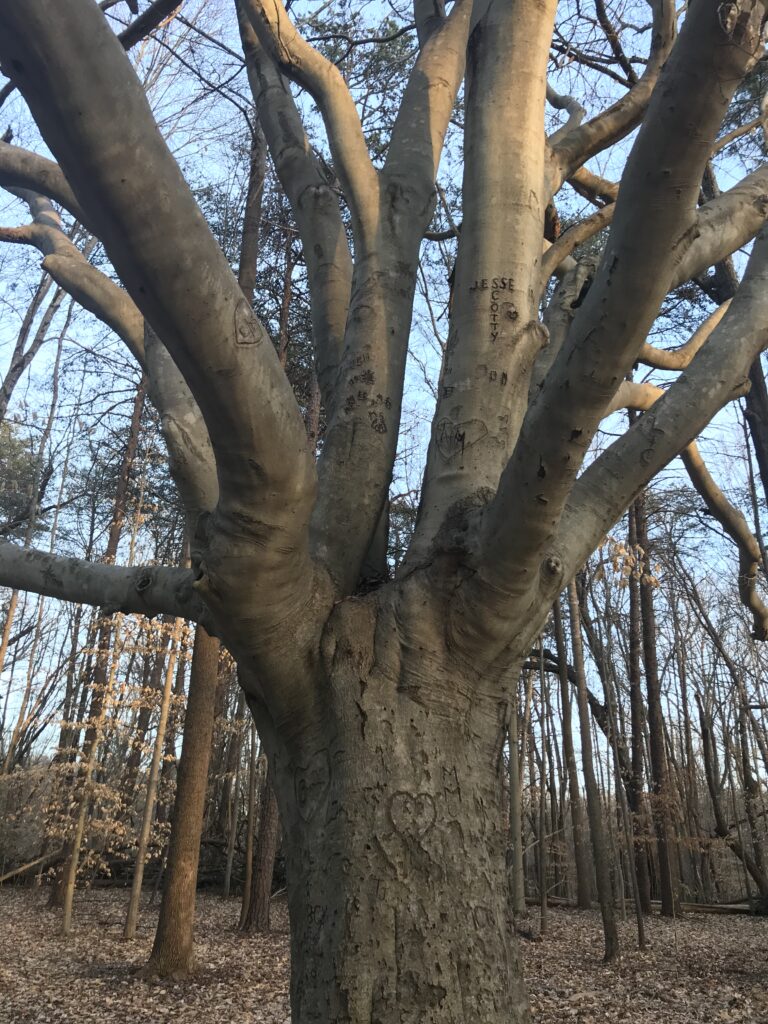
This tree’s carvings are impressive to me. I can look into the carved branches and picture someone scrawling the design in, their foot resting in the saddle where the branch meets the tree.

It’s something that has led me down to the lake many times now since my first trip with my friends. But now I go alone – often turning back or heading into the woods if the lake is already occupied. I’m not sure if it’s my fear of people or my inner transcendentalist demanding the kind of solitude that breeds real reflection. Either way, I hope one day I can sit on the swing and see someone else approach the beach without my skin itching and telling me to leave.
I hope one day I can sit and feel that I belong, and that no one has come to chase me away.

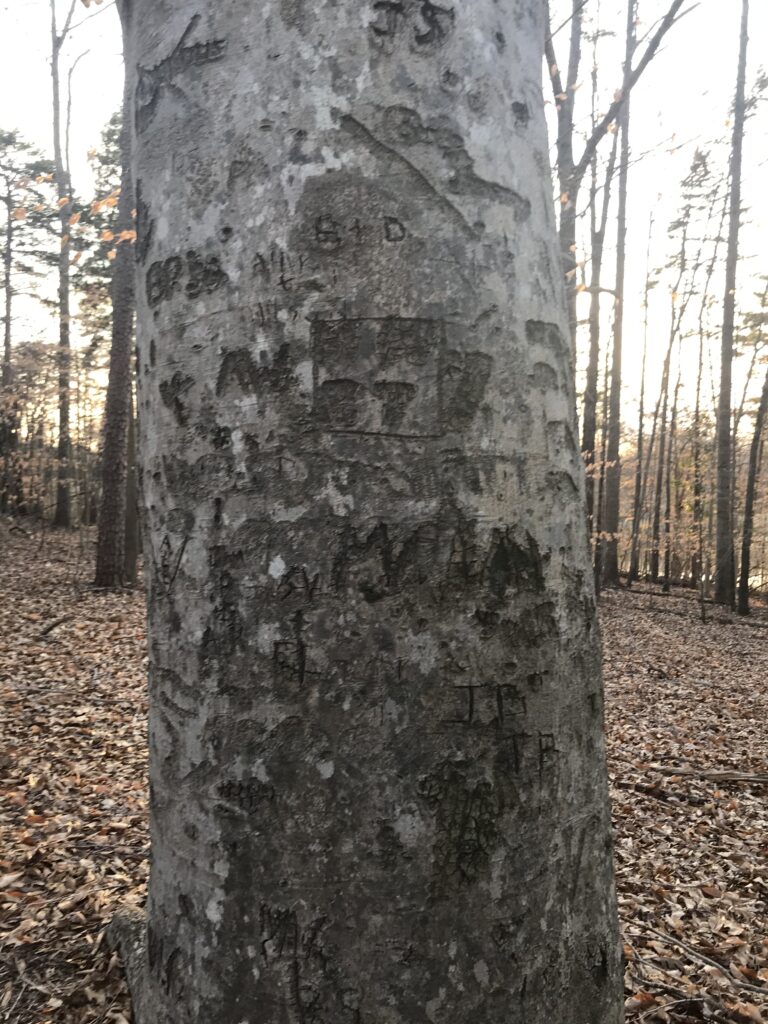
Some of these carvings are so wide (or perhaps just old) that they seem to be part of the natural pattern of the tree. Some, like “JS” at the top are deep enough that you can really feel the desire to be remembered in the carving.

I don’t think i’m going to be doing any tree carvings any time soon. Not that i’m passing judgement on those who do, as I know all too well the wish that those who come after me will remember me. But I don’t want the trees to shoulder the burden of my legacy. Already they carry so much emotion, from love and elation and freedom to misery and bondage and heartbreak. They’ve got enough going on without having to sport my initials, and all the life and personhood that comes with them.

Summer Camp Sucks

I went to summer camp for two summers in a row. I absolutely hated it. I hated the mosquitoes and bugs and pooping in the woods. I hated that every time we camped, a monsoon of rain flooded the campground, our tents, and soaked our sleeping bags. I hated kayaking in the lake and tipping over. I hated cooking my food over a fire and it still being cold and I hated the stupid birds that crowed and chirped so early in the morning. 

A delightful lake, similar to the murky waters I swam in when I was thirteen.

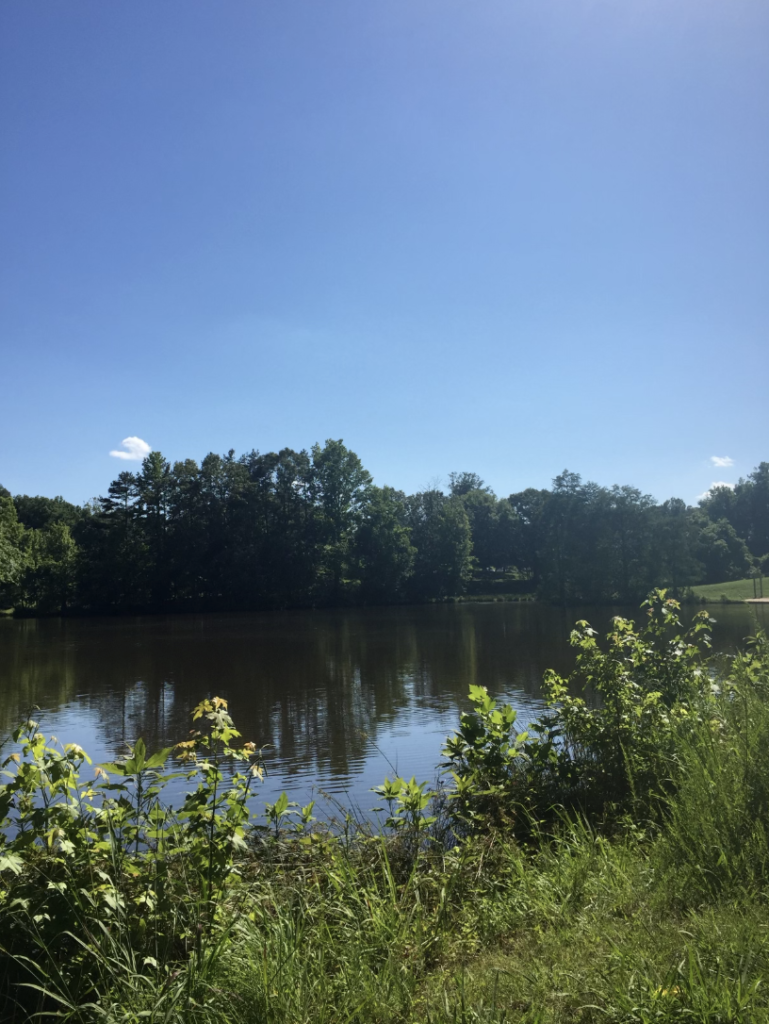
Looking back at thirteen-year-old Taron’s summer camp experience, I wish that I could have appreciated it more. If you would have told me now, that I would go to the woods for fun, to decompress, I would have clearly called you crazy. Now I realize, the noise and chaos is what I didn’t like. I sit here on a broken dam that is graffitied by college kids who have since graduated. The comfortable silence washes over me like the pebbles in the stream at my feet. 

One of the things I remember most about summer camp was the bugs. Even now, I can feel their sharp bites on a thigh they merely saw as a roadblock in the way of a new adventure. 

A pile of leaves ants should be hiding in, but aren’t.

At the time, I hated ants. If I’m being honest, I still hate them. I liked that, just like me, they had a life of their own. They had a goal and a purpose and they were willing to fight anything that got in their way. These little black bugs were powerful, strong, and fearless. I have the bites on my thigh to prove it. 

Ants were my creatures. I created a life for them as I waited for someone to ask me to be their friend on the dining hall stoop at 4H camp. I create a life for them now, as I sit in peaceful silence with crows cawing in the trees above me. 

The ants continue to march forward. They focus on the issues in front of them and tackle each issue one bite at a time. They use the community they’ve built and lean on each other for support and guidance. 

Regrettably, one of my favorite activities was stepping on anthills and watching the colony rush out. I know, I know- I was an ant bully and I shouldn’t have destroyed their home because I wouldn’t like it if someone destroyed mine. But I thought the community was so fascinating. When one ant is in danger, they all are. They collectively work together to neutralize threats and rebuild their home. These ant colonies are what teacher’s envisioned for group projects. Every ant has a role and they work together toward an intended outcome.  

If I’m being quite honest, I haven’t seen an ant since the world began to shut down. It makes me wonder, did the ants know that my Earth would stop spinning? Why did the world collectively realize they hadn’t seen an ant in months? Had I simply been so wrapped up in my own head that I forgot there was one outside of my own? 

A Walk with a Friend

The Woods are always shrouded in mystery. Even though I like to explore them, alone, for this trip, I invited my friend, Isaac.

After Isaac, learned about my night walks, he asked if he could tag along. On an unusually warm walk, we started our trek down the trail and into the woods. 

Typically, I enjoy my time alone. It gives me time to recharge and not feel compelled to fill the silence. I like silence, it gives me space to think. Isaac is the type to understand that silence doesn’t need to be filled constantly. Silence is already loud enough, it does not need to be shared with idle chitter.   

Today, the humidity was thick. I felt my hair frizz with each step we took into the woods. I tried to wipe the layer of moisture from my cheeks, but it still felt like I had a second layer of skin. The leaves crunched beneath my feet and the moon shined like a scuffed spoon through the trees and clouds above me. The new company I had was peaceful. Even though I liked to be alone, it was nice to have Isaac with me.

When Isaac asked if he could come, he told me he wanted to see the Underground Railroad Tree. 

“Of course!” I chirped. I didn’t tell him I had never been able to find The Tree in the dark. 

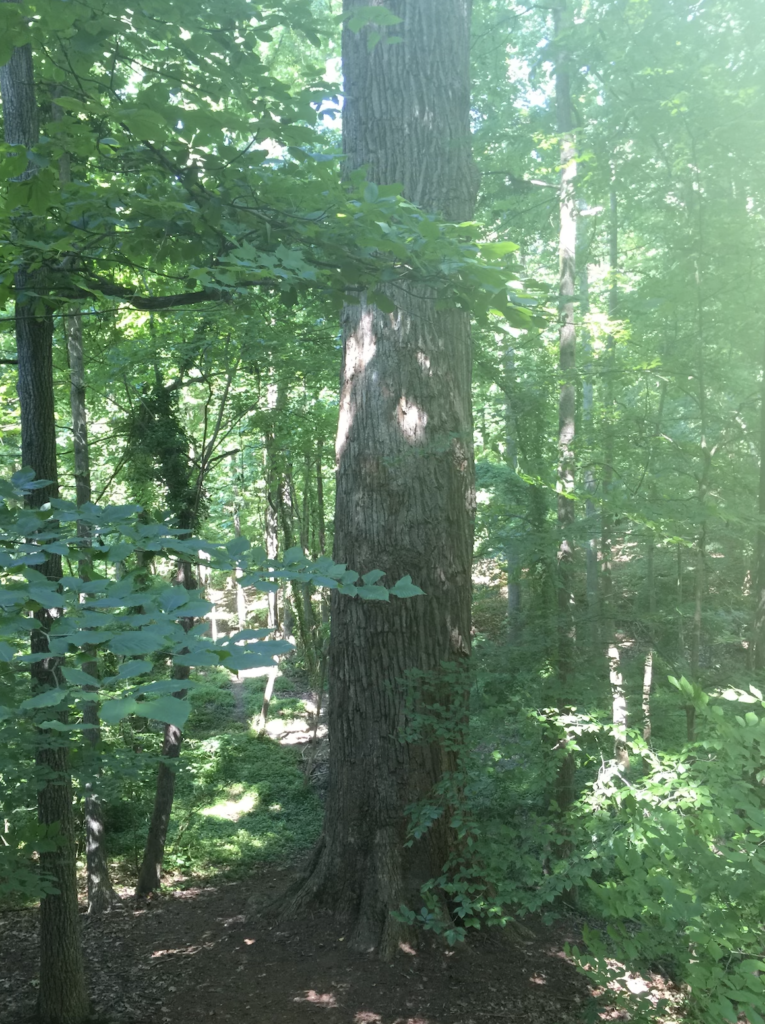
The Underground Railroad Tree is a tree that was not used as a marker, but bore witness to the intrepid escapes and adventures that took place in the pursuit of freedom. The energy surrounding the tree is magnetic. There is no way to explain the energy. This tulip poplar is over 300 years old. When the tree was a sapling, King George I was the King of England. 

I’ve guided many of my friends to The Tree. I’ve shown my sister and my family The Tree at their request. Before that, a friend had shown and shared her own adventures. Even though The Tree is old and viewed by many as a historical landmark, I think the less important stories, like my friend’s personal anecdotes, are just as interesting. I wish that it could talk so I could hear the small stories, as well as the big ones. 

A windy and grassy trail. I think it’s perfect to walk alone, in silence, or with friends.

I think stories like my friend’s are important to hear. They represent a different kind of adventure. Stories like her’s build a bildungsroman that she can tell to her children, so they can pursue an adventure of their own. An intrepid charge into adulthood and learning to leave who you once were is exciting. It gives you a chance to shed old skin and become a new person.

When I visit The Tree, I’m extra careful to be gentle to the land around me. I’ve heard many stories about the spirits and ghosts that roam in the dense woods. I’ve never believed in ghosts, but if they were any, they would be near The Tree. 

A sturdy tree. Not The Tree, but an old one, nonetheless.

I think it’s worth mentioning that ghosts do not have to be people. They can be stories and experiences, legends and whispers.

One day, I hope that the secrets are shared with me, or maybe, I will create my own. Today, though, I’ll start by creating memories on my walk with Isaac. 

Native Natural History

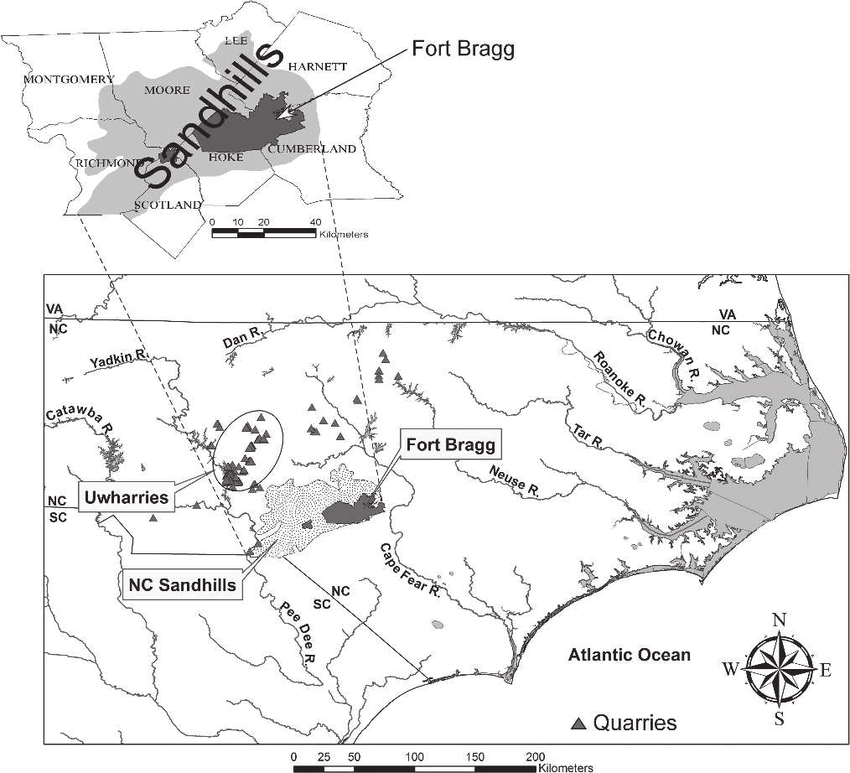
The Sandhills and Piedmont regions of North Carolina have rich biodiversity that should be recognized. The natural beauty is something that you do not see every day, let alone in one place. But Pinehurst Arboretum is home to many natural native plants in its small thirty-five acres. 

Map of the Sandhills Region in North Carolina

The native plants in Pinehurst Arboretum were especially chosen because they were natural to the space being developed for use. Some plants and trees such as Southern Magnolias, were already on the property of the Arboretum when designed. Others that were planted, grew into their natural space, but all plants are native to the region in which Pinehurst Arboretum resides. 

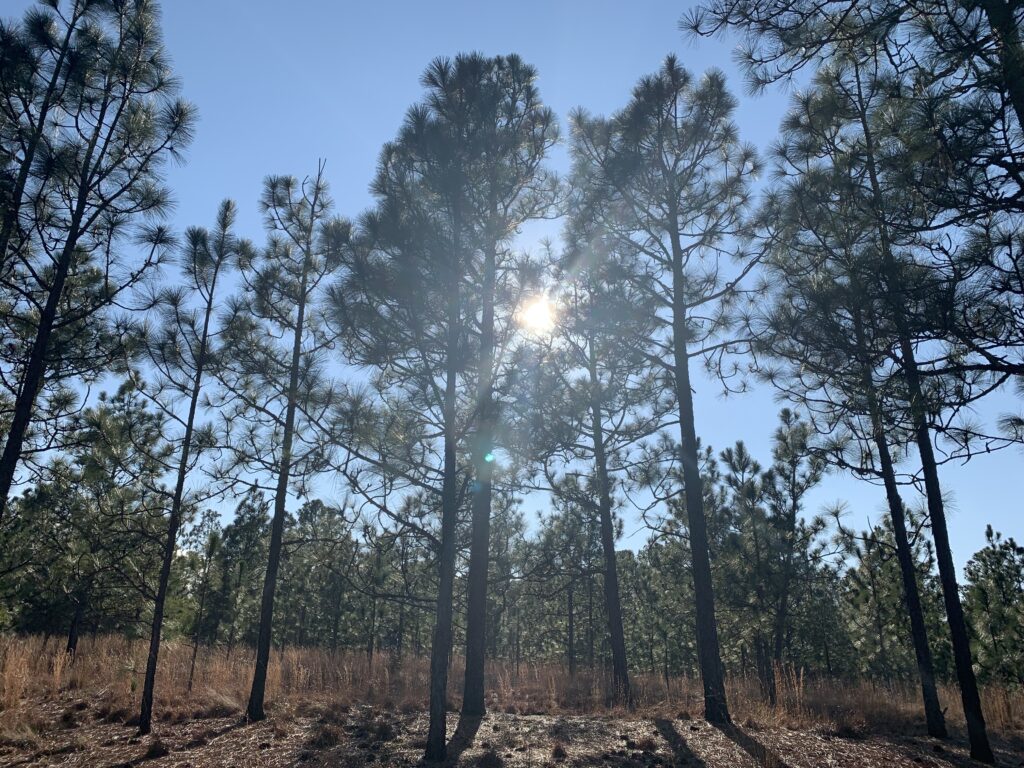
The divided sections of Pinehurst Arboretum, that I mentioned earlier, all have specific native plants that grow in the certain section. The Magnolia Garden obviously has Magnolias, but there are a variety of Magnolia trees, not just the Southern Magnolia. The Flowering Tree Garden, true to its name, has flowering trees of all varieties, dogwoods, witch hazel, and peaches, all live here. The Longleaf Pine Savanna was renewed after a fire. It is home to an abundance of longleaf pines as well as many native types of grass including, switchgrass and wire grass. While the fire destroyed the original longleaf pines, every three to five years there is a controlled burn to help with debris and promote growth in the natural environment. If you look closely at some of the longleaf pine trunks you can make out burn marks from years past. 

Pinehurst Arboretum’s Longleaf Pine Savanna

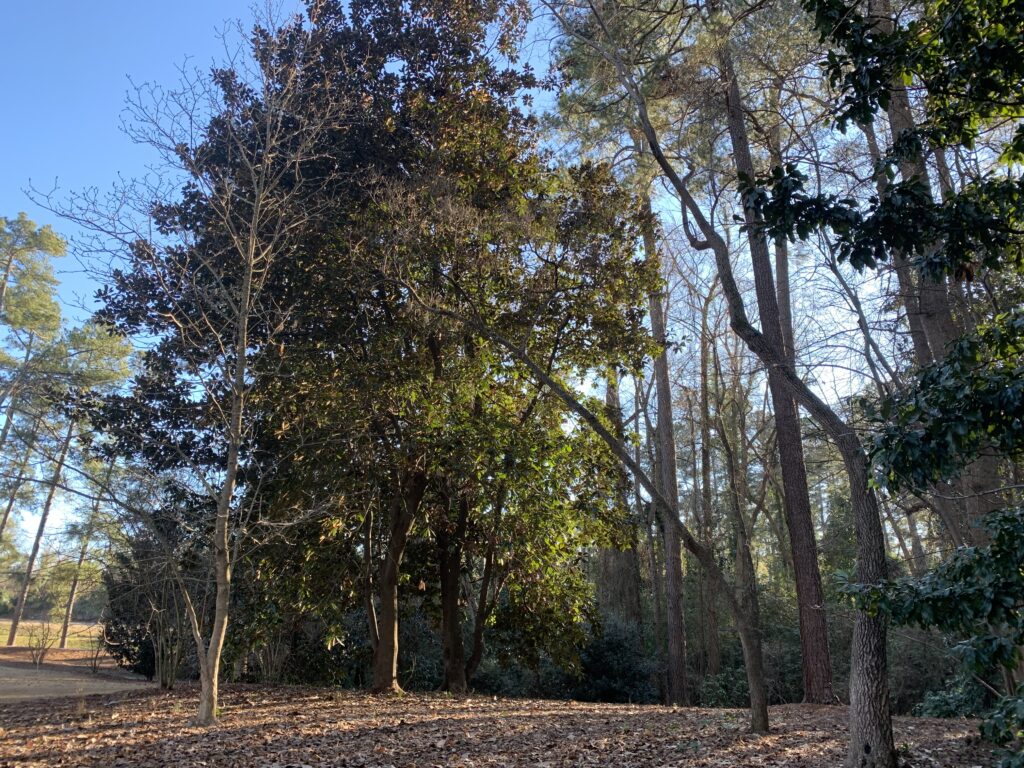
All of the native plants were chosen for a reason. When designing Pinehurst Arboretum, Larry Best, founder of the award-winning design firm LandDesign, used the natural space and researched the Sandhills and Piedmont regions. This allowed him to develop and design Pinehurst Arboretum with a focus on the natural environment that was already in the natural space being used as Pinehurst Arboretum. The majority of the trees in the Magnolia Garden were already present when designing the Arboretum. With the Southern Magnolia trees already there they used the native natural plants as a sign to create an area specifically for Magnolias and other trees and plants that were already on the land. Instead of designing Pinehurst Arboretum to be highly groomed, Larry Best designed it to be of use to the already existing natural space and added on only what was a native plant. He created Pinehurst Arboretum to be natural and to use native plants.

Pinehurst Arboretum’s Magnolia Garden

There is even a space of native plants that are dedicated to helping wildlife. The Native Pollinator Garden is a space that is certified as a National Wildlife Habitat because of its use for animals and insects. The native plants provide shelter and food for butterflies, bees, and other insects. And with the Garden being all native plants, it helps the insects because the native plants are what butterflies and bees find in an uncontrolled natural environment.

Nature in Pinehurst Arboretum, while controlled in some areas, has been driven by the decision to include native plants. Making it a natural area for all to come and enjoy, full of native plants that provide benefits to animals and humans alike.

Asheville Town Mountain Preserve

Animals

As we know, Asheville’s Town mountain Preserve is a beautiful place. It’s home to some of the most breath-taking views from the mountain tops in all of Asheville, its littered with a beautiful array of different trees, rocks, bushes, creeks, and water streams, and of course is home to some of the most luxurious cabins and houses that a town this size can offer.

What else will you get the chance to see during your stay? The answer may already be obvious, but if you’re looking for the definitive outdoor experience, you will more than likely come into contact with some of the beautiful animals that inhabit Asheville’s hilly, gorgeous mountains.

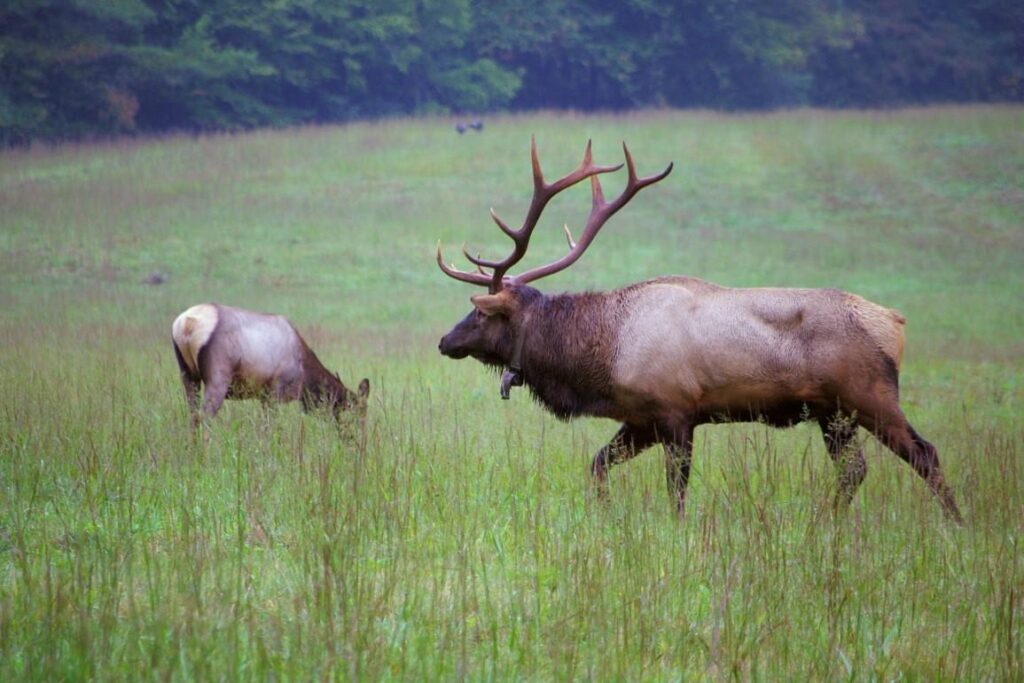
Picture of the Elk around Asheville

The Town Mountain Preserve itself doesn’t talk much about its furry inhabitants, so I’ve consulted the explore Asheville page to truly talk about some of a the wildlife one can run into while out in the wild. Elk are just a few of these animals. With their large antlers and furry coats, they make for a magnificent sight to see. While most Elk will be found near Cataloochee, there’s a chance these large creatures may appear in the deep forests of the Preserve.

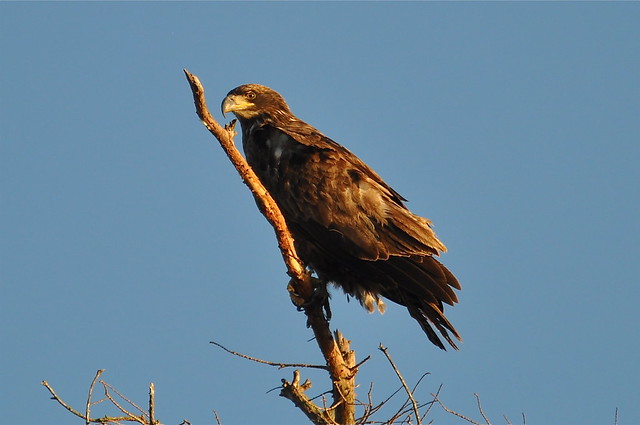
A bald Eagle perched atop a tree

For bird watchers, there are plenty different kinds of fowl to watch in awe. Bald Eagles are just one of the birds that soar the mountain skies. There are also Peregrine Falcons, Great Blue Herons, and even Woodpeckers. According to exploreasheville.com these are only a small few of 200 different birds that make their home in the mountains before a few migrate south. This makes the town mountain preserve a prime destination for any bird watchers or admirers looking to snap some awesome pics, or just to admire nature with their own two eyes.

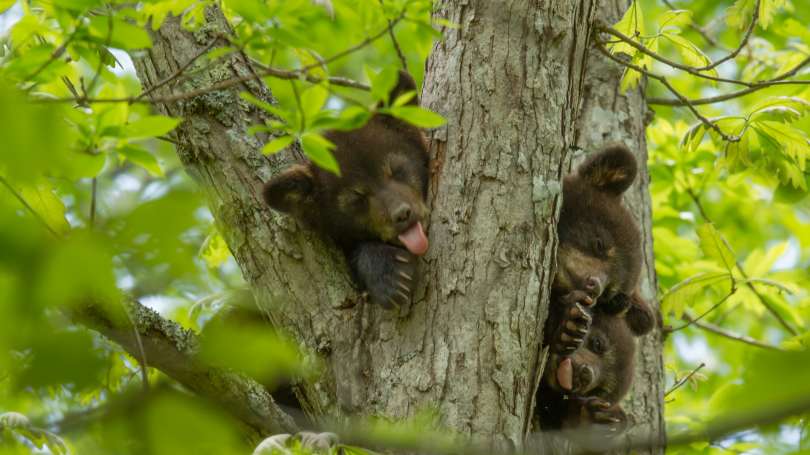
Of course, wherever there are mountains, you can always expect to see a few bears. It’s not too uncommon to spot a bear around the high mountains of Asheville, and this will often be the cause of many people’s curiosity, as well as possible panics. Luckily, Black bears are usually quite harmless unless provoked. These furry animals are adorable and fun to watch, but it’s important to take precautions before enjoying them. Make sure to keep food away from the bears, don’t feed them in any situation. Make sure you valuables are in hard to reach spots, and certainly done make an effort to provoke or egg on any of the bears.

The wildlife at Asheville is certainly a great splendor to see and offers some of the most unique and beautiful animals in North Carolina. get out your bird watching binoculars, and take the proper precautions, and you’ll be sure to see all that the mountains have to offer.

Snake Dreams

I went walking a couple weeks ago, right after my roommate had arrived back on campus and I had begun to feel cooped up, unable to pace back and forth in the room like I had for the entirety of January. As I rolled through the walkway leading from Founder’s to the road, I realized how often I had taken this path and decided to make my first trip out to the woods. I felt sort of awkward on my way there, suffering from my ever-present feeling that I’m somewhere I don’t really belong or I’m not supposed to be.

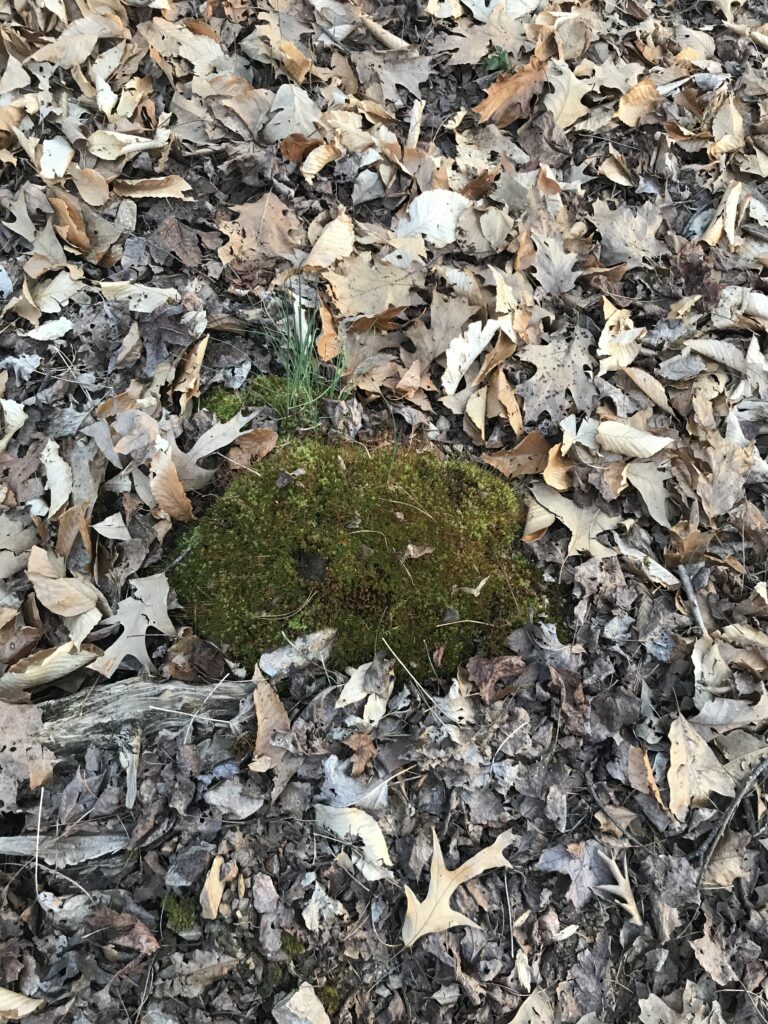
The whole time I walked, my somewhat instinctual and somewhat personal fear of snakes was close by. It probably would’ve made more sense if it were my fear of spiders instead, but that seemed further away despite the fact that the forest was likely crawling with them. Snakes have always followed me, often in the form of recurring dreams. I’ve had several dreams where I was bitten by a snake, always either in the right hand or in the face. I thought about my snake dreams as I wandered through the woods, my boots crunching the grass and the blonde-leaved trees standing still as they watched me walk by. I passed little mounds of moss and fungi, green and cream islands in the ocean of fallen leaves. A wide tree toppled over, leaving a crater of red soil in its wake. Shortly after the snake dreams, I always experienced a change in my life, often in the form of loss. I had one before losing a friend, one before changing schools. One heralded the death of my grandfather, who died of liver cancer when I was ten years old.

The snakes have appeared as omens in my real life as well. When I was young, my mother would often take my younger brother and I to roadside parks or soccer fields to play. It didn’t cost much money, and it seemed a sort of adventure back then, getting to see parks all over our little corner of the state. One day, we had gone to a little playground with the usual swing/jungle gym/slide setup. My brother ran out of the car ahead of myself and my mother towards a ramp that led up to the playset. 

Under the ramp, I saw a large red snake with what looked like a spade-shaped head. Alarm bells rang out and I called out to my brother who was running towards it with wild abandon. Years later, I still tell the story sometimes, much to my brother’s chagrin. He is offended that I even jokingly insinuate that I saved his life in some way. “There’s no copperheads in Michigan,” he’d say with a sour look on his face. “Just some garden snake. You made a big deal out of nothing.” 

And perhaps the story is misleading the way I tell it, because I never mention the dreams. I never let slip that maybe my fear was less for my brother’s safety than it was concerned with my own fear of change. 

A picture of a little mound of moss surrounded by yellow-grey leaves and some sticks.
One of the little “islands” I saw. It reminded me of the old folk story about the turtle with the world growing on its back. In terms of perspective, to a bug or mite that little moss mound may very well be the whole world.
css.php