Choosing group research topics always tends to be a painful and messy process – it’s hard enough as an individual – so I was very pleasantly surprised by how smooth the ordeal was for our group. From the outset, we all had similar foci in mind for the project; if I’m not mistaken, I believe everyone in the group had written something about gender/female/queer identity on our initial interest cards. Since all three sort of go hand-in-hand, it wasn’t hard to hone down that portion of our topic. The rest (time period, geographic distribution, and other unifying links) took a little bit of work to finesse, but it wasn’t anything particularly difficult. We were all very willing to focus in on the western parts of the Silk Road, and once we had that down, we bounced off of instructor suggestions to settle our focus on the 18th-20th centuries, as well as unifying our entire research question under our individual topics’ relations to Islam. We’re currently looking at designating a specific interest to each group member for our individual research, which we’ll then bring together and connect to one another’s topics (using Islam as a parameter throughout the research so that we’ll actually be able to connect what we have). None of our individual topics are completely unrelated to the rest, either – I’m focusing on queer identity and its relation to Islam, another member is looking at racial identity through the same lens, and other group members are looking at the various facets of female existence in the region and time period we chose.
My individual role within the group has become that of the timekeeper. Personally, I’m very happy to have this role – I’m terrible in public speaking situations, so had that fallen on me the group likely would have suffered as a whole. Similarly, while I’m usually good in leadership roles, it’s harder for me to bring out my assertive side and tell people to pull themselves together when I’m not already close to the people I’m working with; while it wouldn’t have been catastrophic, we might have gotten off to a rocky start had I ended up the facilitator. Timekeeper works out far better, as it allows me to fill a leadership-type role without necessarily needing to chew people out. Instead, I’ll be working to figure out some preliminary due dates for the various pieces of our project and monitoring where people are in their work so that dates can be adjusted to better fit our team’s progress.
Given how well everyone’s interests within Team Sky aligned, I’m not expecting too many issues to arise due to team dynamics. We’re all on the same page (at least so far) about where we’re taking our research and final product, and we’ve worked to build a research topic that would allow everyone some wiggle room to pursue their own specific interests. Everyone has been quite supportive of one another, and everyone wanted to ensure that no one’s interests were edged out in refining our topic. Additionally, I think we’ve all been given roles within the group that will play to our abilities and benefit how we work together. We were lucky in that Teiji feels comfortable in a public speaking role, and that covers what tends to be one of the shakiest parts of any project. Jamie was on top of notes during the class activities we’ve done so far, so she definitely seems like a great pick for our group’s recorder, and Elise is serving as facilitator and ensuring that we don’t unravel at the seams – I’m already good friends with her, so I know that should conflict arise she’ll definitely be able to diffuse any tensions and find a suitable solution.
That said, I’m not entirely without concerns for our final product. My personal interest within our topic is queer identity; belonging to the queer community, it’s a topic that I have a personal hold in and I initially chose to focus on it because I figured my connection to it would keep me invested and help bring out the best of what I have to give. Even so, I’m worried that it might end up falling through due to a lack of sources. When we were narrowing down our time period, we deliberately chose a more modern time-frame so that we’d hopefully have more luck in finding information for both myself and some of the other more specified interests that other group members had. I’m still worried in spite of this, though. I have a backup focus should queer identity fall through (the role of femininity in religious ritual), but I hope that I don’t lose some steam if I ultimately need to make that switch.
I also want to say that I think that the way the teams for this project were initially chosen was a fantastic system. One of my biggest anxieties with group projects is simply finding a group to join; it takes me awhile to get comfortable enough so that I can really interact with new people and not have it be awkward, so if we had been told to figure out teams ourselves I likely would have ended up in a group with a topic I wasn’t interested in and knowing myself I probably would have been too uncomfortable to say anything. By having the instructors attempt to pair us based on our interests, that anxiety was cut out, and while I can’t speak for others, it certainly benefited me.
As for my performance within the team and within the class so far, I’d say I’ve been pulling my weight. It’s hard to truly assess that at this point since we’ve barely done that much of anything, but I haven’t been neglecting any work and I’ve been looking into some potential sources that might aid in our research. I tried to be active in the narrowing of our topic and I gave suggestions for how other group members could incorporate their primary interests into our final product. If this reflection were due a week or two later I’m sure I’d have more to say, but that’s about it up until now.
Initial Reflective Post: The Tip of the Tongue
This early stage of the project has been primarily about passion. The Tongue Team started out with passions and ideas all over the place and some confusion on how to interpret the parameters of “tongue” and unify ourselves. This process began with a dump of ideas and the back and forth that comes along with inspired people bouncing all their ideas off of each other. During the first few meetings of our group (in class and outside of class), we had the loose interpretation of tongue as language and the diffusion of culture through the Silk Roads. With this vague topic we attempted to narrow in on either a specific route traveled throughout time, a specific region, a group of people, or a time period. We needed to ground ourselves in one of these areas, but this task seemed fairly impossible to accomplish without knowing more about any group of people, route or time. Recommendations of following the Maritime route and spices were given to us, yet we still didn’t seem sure of that; we didn’t feel sparked from that route or the time period of the 13th Century C.E.
Nothing had fallen into a place that felt right for our group, so we kept moving pieces around and bouncing new and changing ideas off of each other. Chris, Zach, Delaney, and I met in the library to flesh out a solid concept for our group to unify around. Through a very enthusiastic conversation that kept bringing us from tangent to tangent of different possibilities, we landed on an idea that had us more inspired than any other: a meal. The topic of food and the cultural diffusion of cuisine had been circulating for some time, but had not taken the forefront of our group’s mind until this discussion. Once the topic of food was focused in on, the ideas bounced around faster and with growing excitement. The idea that cinched the topic of food for us was the concept of choosing one meal in order to break down and zoom out from in the different directions of the specific components of that meal. We also decided that a meal was not just going to mean cuisine for us, but also the traditions that came along with the preparation, serving, and customs of the food and eating of the food. Each of us would choose part of the meal (the beverage served, the bread, the meat, the way in which it was served and by whom, etc) and conduct our own research about the history, context, and significance of that piece of the meal.
The next stage of evolution for our team was the location and time period of this meal, which brought us to the nomads of the steppe region in a very early time period; roughly 3rd Century CE Xiongnu Empire. What we very quickly figured out was that this group of people and time was not going to work out. The Xiongnu did not write and therefore the knowledge we have of them is scarce. The suggestion by Eric to focus on a modern meal and trace back each component set us on the track we are now ploughing forward on.
The foundation on which we plan on building our project off of is this: the etymology of a meal in Kashgar. We chose Kashgar, because it holds a mix of many cultures along the Silk Road. Kashgar is a fairly central location along the Silk Road, and one that holds geographical significance as it is an Oasis city and would have encountered a lot of traffic of merchants and travelers over time. The etymology piece of our project is the key component; each member of our team will be exploring a part/a few parts of the meal through time and space along the Silk Road. The meal itself will act as the glue that holds our respective components together and enables those separate pieces to become more digestible to our audiences (pun intended).
At this point in time, the breakdown of our team is based on experimental research that will determine what meal we choose and will help us to narrow in on our individual pieces of the meal through the process of starting with large research and slowly zooming in. Zach, the presenter, is looking into the beverages consumed in Kashgar, the significance of these drinks, how they were drunk, the processes of making these drinks, and how the culture around food diffused out of and into Kashgar. Delaney, the recorder, is focusing her research on the food customs in Kashgar as well as the significance of folklore; how folklore has diffused knowledge about food and traditions around food. Chris, the facilitator, is researching the ingredients common in Kashgar dishes: spices, meats/animal products, pasta, etc; he will be mapping out where these ingredients originated from, how they were used by themselves and in larger meals, and their significance within the culture of food in Kashgar. My personal role is that of the timekeeper, and my research is on the different kinds of preparation of food in Kashgar, equipment used, and the methods of cooking. I am very interested in learning the different ways meats, breads, and other components of dishes were cooked; what kinds of tools were used, what form of cooking did different meals have, what were ingredients cooked in and how were those pieces of equipment made. Bread has become a special area of focus for me, because of its importance within a meal and the especially delicious ways that bread is made and cooked in Kashgar.
The technological component of this project was initially intimidating to me, because I thought I would have to learn skills such as coding that would be an added challenge to an already challenging team project. On the contrary, however, WordPress seems clean and straightforward. Seeing the skeleton of the website we will be adding flesh to made the project seem real for the first time and built up the anticipation of seeing all the separate components of the individuals and groups start to come together on it.
While sometimes confusing and slightly stressful, this has been an extremely fun and rewarding process thus far. Our group feeds off each other’s enthusiasm and inspiration in a way that creates really wonderful products and a kind of cohesion that can often be hard to accomplish in group projects. I think our passions are what drive the group, which has been vital so far, but might hurt us along the road when our passions keep us from making concrete decisions. I have high hopes for our team, our explorations, and our creations.
Initial Reflective Post- Sydney
My role on the Sky research team and in the class as a whole is being a TA (a.k.a. Silkworm). The duties that I have as a TA involve acting as a facilitator and mentor to the team, as well as a liaison between my team and the professors of the course, Zhihong Chen and Eric Mortensen. Apart from the teams, I have the role of participating in the class as a student by doing the readings and taking quizzes and tests. Furthermore, I will be working with the other TAs to pull together all of the information (including writings, pictures, documents, etc.) from the teams into one big compilation map of research. In regards to my position as a TA, I believe that I can best assist my team by being available for any questions or concerns that the team might have, as well as doing my best to help resolve those issues, as they arise, in a timely manner. Furthermore, I can help make sure that the team is meeting deadlines and making adequate progress on the research project by checking in on a weekly basis. My biggest apprehension about being a TA is letting go of the control over the research and over the project itself. I have never been in the role of TA, so I will have to learn how to step back and let my group make decisions, but be available for help or direction.
Concerning the course itself, I am excited about physically seeing and experiencing some of the places and cultures that we are learning about this Fall when I attend the study abroad trip to China in January. For instance, it will be interesting to see the different landscapes that helped shape the Silk Road and helped shape the communities that travelled and/or settled on the land. Furthermore, most of the readings and videos for the course have been extremely interesting. I would say that I have enjoyed the documentary “A Thousand Kilometers Beyond the Yellow River,” and the music that we have been exposed to so far, such as Mongolian throat singing and music by Kitaro. I was also intrigued by the article “The Spiritual Identity of the Silk Roads: A Historical Overview of Buddhism and Islam” by Amir H. Zekrgoo because of his discussions about East versus West, and his clear explanation on how new religions form and can be similar to other religions based off of cultural conditions. I think that Zekrgoo’s discussion about East versus West, and the necessity of balance between the two, has many implications that could aid in an inclusive worldview and aid in helpful approaches to everyday life, in small and large matters.
Additionally, I am just so enthusiastic about the content overall in this course. I enrolled in the class Spread of Buddhism Across Asia my final semester at Guilford and I had a wonderful time learning—mainly for the first time—about Buddhism, Confucianism, Taoism, and the cultures surrounding the creation and spread of those beliefs. It was actually the Spread of Buddhism Across Asia course that made me so eager to come back after I graduated to take the Silk Road course specifically. This Silk Road coarse is allowing me to expand and apply the knowledge that I gained from the Spread of Buddhism Across Asia course while learning about many new ideas, religions, peoples, landscapes, interactions, and history.
Although I am extremely enthused about the course and I am very grateful for the opportunity that I have to take the course, there are still aspects of the course that I am nervous about (mainly because I am just a nervous person). Firstly, I am apprehensive about learning all of the technological aspects of the course. I have never done web design or anything of the like, so I wonder how easy it will be for me to pick it up (and then be able to teach others if they need help). Technology is not difficult for me to learn or understand, but it is not automatically intuitive for me, so it takes me a couple of tries to learn and/or figure out. Additionally, I am anxious about the TAs’ responsibilities for the larger research project because it will be a lot of work in a very short amount of time. I worry that it will be difficult to balance those responsibilities with the other work in the course (such as readings and quizzes), as well as to balance personal time and jobs outside of Guilford. As of now, I feel stressed about the amount of work we are all being held accountable for, so I wonder how others are feeling about the workload. Furthermore, I realize that I am a perfectionist as well, so it takes me longer to finish assignments, thus making me worry more about workload! In order to combat my anxiety and slow (but thorough!) work process, I am aiming to organize my time to make myself more efficient. One way that I am planning to organize my time will be by trying to get things for the course done in advance, because I also have to plan around jobs and for personal time.
Overall, I have noticed the theme of balance arising within this semester for myself, so I will embrace this opportunity to learn how to healthily maintain equilibrium mentally, emotionally, and physically while I strive to do the best that I can in this course and in the rest of my life as well. I will strive to focus on balance and see how that affects my stress and worry. I am so ready to learn more about a part of the world that I do not know a lot about and to hopefully help educate others down the road. It is daunting to think of how little I know about so many other peoples and cultures in the world, but I will do my best to learn what I can in the time I am given with an open mind and open heart.
Inside the Heart
The Heart…
I am [the head of] the Heart. Puns aside, this simply means that I am the Project Manager of the Heart Team. Thus far, my role has led me to take a bit of a backseat in developing our research topic. My work instead is mainly advisory. I’ve facilitated the team as they’ve delegated their own roles, developed a timeline for their work and a topic proposal. I sit back and try to visualize their ideas as a digital project—that is, I try to determine if there is enough information on the subject matter, if the topic needs to be narrowed down, if there is a narrative, if it’s in our technical means, etc. If I can’t see it, then something needs to be modified. Funny as it may sound, this vantage point isn’t easy for me—if anything, I’m a bit of a backseat driver.
Perhaps this wouldn’t be the case if our project weren’t so darn cool! The Heart Team has proposed to observe the ways in which religion, ritual, and music interact in the Mongolian Steppe. Our hope is that we can trace how the diffusion of musical traditions relate to these practices. If we are able to find that there is a relationship, we are going to follow an instrument that has played a significant role in a tradition across time and space—such as the horsehead fiddle.
Below is a video that explains a little bit about the horsehead fiddle:
An instrument such as the horsehead fiddle, provides insight and narrative about tradition and culture. It not only provides a narrative, but it raises questions about how the Steppe culture has been influenced by music and how music has been influenced by the Steppe culture. For instance, the Steppe are deeply tied to horses—and the horsehead fiddle not only emulates a horse, but is made up of horse parts. Is there any relevance to this notion? We seek to tell a story that approaches this question.
What I am most concerned with is narrowing our topic down. Our tactic in choosing a topic was for every person in the group to state where their interests lie. We then took this cumulative list and worked to find a topic that could encapsulate it all. Ritual is an extremely broad subject. Can we really capture it all?
I trust the team. Partially why I have not put the brakes on our brainstorming is because I believe that if there is a way to do this, my team will figure it out. We won’t know how it all connects until our research is done—then we can be selective.
The Team…
Team roles include a timekeeper, a reporter, a recorder, and a facilitator. All roles have been well matched with a team member. Our process of delegation came pretty naturally. Right off the bat, Nathan helped to facilitate the group. Not all the roles were as clear though; every person seems just as equipped to take on any of the roles. So, more out of default we assigned Emily to be the reporter, Jilly as the recorder, and Emma as the timekeeper. So long as each person stays engaged with their position I don’t think we’ll run into any problems.
On top of their team roles, they all have their individual research to do. Emma is specifically looking at the ways in which diffusion has influenced musical instruments along the Silk Road. Emily is researching musical movements and the ways they have influenced the performative qualities of Shamanism. Nathan is interested in religious ritual as well, but with a specific focus on music’s role in medicine and healing. Jilly is observing the ways in which place, religion and politics have influenced traditions of dance and music.
Research Methods…
I need to stress finding common ground. Of course, there is some overlap in subject matter, but I think we also have to shape our ideas to compliment one another. Thus far, the common thread seems to be the horse. Perhaps I will suggest that in these next two weeks we start focusing our research on the horse and allow this information to determine our personal topics.
I am afraid that having such a broad topic will lead our members to stray far apart, causing our collective body of work to not be cohesive. Because of this, having regular meetings will be very important. Perhaps, we should also have work-sessions in which we allot time with the group to do our own personal research.
How’m I Doin’…
Enough about my team—what about me? When I first started working on the Digital Silk Road Project, my role was a lot different than what it is now. Essentially, I was doing what my team members are in the midst of—deciphering my passions and matching them to a time and place along the Silk Road. I chose photography as my passion and devised a plan to explore the ways in which photography is used and exploited, and how it reflects culture along the Silk Road. This project has been left incomplete. When I chose to be a part of the Heart, I had a secret wish that we would focus on photography. Immediately it was made clear that the team’s interests are elsewhere. We decided on music not because any of us are super passionate about music, but because music has a wide enough scope to incorporate our other interests.
In a way, to create this project everyone has had to make a compromise. At first when I realized that my team was interested in music and not visual arts, I felt panicked. How can I be expected to work hard on something if I don’t care for the subject matter? This is what I’ve concluded: Digital Humanities calls on us to work as a team—it doesn’t necessarily matter what the subject matter is because our personal role is what defines the project. So, what I need to figure out is what my personal skills are and what I have to offer to my team. I believe that my background in visual arts will be essential in making a tangible product. In which case, I am not making a compromise; instead I’m expanding upon my knowledge and skill base.
So in other words, to evaluate myself, I am thinking of myself as less of a backseat driver and more as someone who has something important to offer. Just like my team though, I need to do my own personal work—I need to work with Tierney and utilize other resources at Guilford to gain proficiency and confidence in digital media and databases. Like the rest of my team members, I have to stay connected and keep bouncing ideas off of the group to ensure that their vision is coming true.
To answer the question, I think I am doing well. I am in active communication with the team while being set slightly apart. I’m available for questions and concerns, but also serve as a critic for the ideas that come forth. In the breadth of the whole project, I feel strong in my position. I am a student, a Silk Worm, and a junction between my peers and the amazing resources and people we have available to us.
Just for funsies (and because I’m kind of obsessed with photography), I’ve also included a link to the first art space in China dedicated exclusively to photography and video art, the Three Shadows Photography Art Center.
Here is the work of and a link to the artists RongRong and inri, who founded Three Shadows:

The Silk Worm from Earth
The Earth,
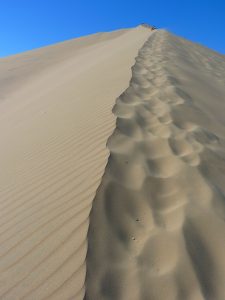
I am the Silk Worm for the Earth team. Other than being exploited by having silk reeled out of my body, I also advise the team. With the group sounding like it would be a huge burden, we are, thankfully, not researching the whole Earth. More specifically, we are based on areas of choice, along the silk road, which is still a large chunk of the planet.
During the first meeting, my role as a Teacher’s assistant was slightly murky. I had assumed that I would be another student in the group, except that I report back to the professors. However, after a brief explanation, it was brought to my knowledge that I am in charge of advising the group; to make sure meetings are set, progress is progressing, and time is well-managed. But other than that, I am merely a normal student going on the journey with them.
As for group members, we have Sam, whom in which shows an appreciation for medicinal plants and herbs, Austin, who is interested in architecture and agriculture, and lastly, Jake, who wants to focus on crops grown in different environments. The group started off thinking of how their interests can create crossroads for each other in doing sub-projects for the main project at hand, (as well as figuring out what that main project would be).
Austin went ahead and discussed about researching architecture and agriculture. Jake thought of possibly doing a crossroad with Austin’s research. Sam was thinking. Austin went ahead and said he wanted it all to stick together. Sam then considered that we should do a week of research so things could narrow down. Sam shoots and says he’ll research on medicinal plants and herbs. Jacob then says that he would focus on the crops grown based on environment. I was nodding and writing their speeches on my laptop.
So forth, the team had a meeting and wrote a proposal which states the research question: ““How did the fragility of the agricultural systems and medicine of oasis cities affect the larger silk road?”
And here’s the part where I state what the Earth group is all about. Slightly late, I know. Yet i’m quite certain you have a good idea on what this is about. The Earth team is assigned with the collective interest in medicine, food, herbs, magic, irrigation and farming. Crossing out magic due to some group member trading, we focused mainly on agriculture and medicine. Furthermore, the members of Earth have refined it into what their interests lie on, with the absolute knowledge of building bridges on each individual to create a larger structure. And honestly, I cannot take any credit for what the group has done. I was only there to throw in some advance, and slightly, just slightly put ideas into the brainstorming. This being said, the proposal that was posted that Wednesday night was all because of Sam, Jake, and Austin. You did a fine job, read it more than once.
As an Earthly silk worm, I feel confident that the group members that I have been assigned to will do great in the research. Even before brainstorming and official work, the group showed much enthusiasm to work with one another; a key part in group projects. Also, that our interests are very much aligned, and well grounded in the Earth group. However, I cannot say much as we are only on the first stage.
One of my concerns would be of what I am expected to do. The fear of not giving enough, or not doing a good job as a TA struck me during the first meeting. I was assigned the role of advising the team, yet what if even my own intellect and coordination would fail them. It grows into me, this feeling of being just moderate. Also, creating physical work into digitized files and publishing it into the internet where it is replicated into everyone’s screen in just a click of a button, worldwide. We are available for all that has access to the internet. More so, those who are interested in the Silk Road, and are critical to judge research. A lot comes to mind when concerning inadvertent plagiarism, slightly off data, and maybe even inadequate research. However, this is not to say that my team is below that. This is merely a fear that comes to me. But a benefit nonetheless due to the fact that I will be more aware of what is to be expected. Furthermore, I will keep this fear as a constant reminder of expectations and warnings, similar to that of Murphy’s law, in which anything can go wrong, giving the incentive to reconstruct and replicate for errors, fixing it.
On another note, I have a lot of excitement for this project. The fact that we are focusing on agriculture and farming is definitely my forte. To know more about the origins of organic product, medicinal herbs; almost following it physically as we research historical timelines about different oases and the influences of medicine that have impacted Pastoralists or Agrarians, and so forth. I am more than content that I was assigned into this group.
Also, contrary to what was mentioned above, I am quite excited to see our results go into the WordPress, and globally for all to see. Yes, there are fears of criticism and faulty information, but I do trust that my group can execute and show a well written research paper on the fragility of the silk road. A Yin and Yang of some sort, where fear makes me know that I will work harder and make it better, you can understand this i’m sure.
All this being said, I am grateful to be having the opportunity to travel the silk road this January. From advising the research to stepping on the dirt path that has been the crossroads between countries and key role in influential exchanges, it truly will be a rewarding experience. As Marco Polo says himself, “I did not write half of what I saw, for I knew I would not be believed”.
Silk Road Adventure: 1
What an immense task it is to choose a specific topic out of a region spanning three continents and over 2000 years. The Silk Road is full of interesting history, cultural diffusion, empires, nomads, languages and more.
As part of the Tongue Team, I can attest that we were initially overwhelmed. Our focus drifted from examining empires and social structures, to looking at translators and the maritime trade route. Our interests were then piqued by the nomadic Xiongnu peoples of the steppe in central Asia, who’s milk wine and pastoral lifestyle grabbed our attention. However, upon realizing this group of people left no traces of a written language, we shifted our scope yet again to concentrate on the city of Kashgar, the Uyghur people, and the Xinjiang region of Western China.
Despite figuring out a location, we were left to pinpoint our interests to form a coherent and feasible project. Our interests in the history of the region coupled with Kashgar being a landmark city throughout the history of the Silk Road, made choosing a time period especially challenging. Several members of our group—myself included—had expressed particular interest in Chinese cuisine. In a moment of brilliance, the thought of using a contemporary meal as a vehicle for examining the customs, history and society of Kashgar, was put on the table (pun intended).
While we have yet to decide the components of the contemporary meal of choice, many options are available to choose from. The importance of breads such as nan, spices like cumin, tea and other beverages as well as livestock, provide a variety of choices regarding traditional meals. Similarly, the traditions behind preparation, storage and eating habits will certainly play a role in our research in the weeks to come. As the tongue group, we had ironically shifted our stance from the tongue being a symbol of language to a symbol of food.
Having chosen food as our focus, roles for our group simply grew out of food itself. My interest in cuisine stems from eating food in China. The unique dishes, cultural values and symbols food has in certain areas are fascinating, not to mention how incredible the food itself tastes. As a fan of spices, noodles and street food, I’ll be examining the diffusion of peppers, the significance of grains and also the importance of livestock to the Xinjiang people throughout history. My research will likely take me from the Mediterranean to the Ming dynasty in search of why people eat what they eat in Kashgar.
Unfortunately, in my research so far, food has not been commonly documented. Following spices from place to place will require considerable browsing through first-person accounts as well as merchant records if available. I’m predicting that this is the main area where our group will need technical assistance. How to effectively find articles that will prove useful to our project may require some outside help. Though this could be a deterrent, our focus on contemporary food will give us a good starting point for our research, as we won’t be blindly searching for the traditional meals of 12th century Xinjiang residents. It so happens that a previous teacher of mine identifies as Uyghur and lived in Xinjiang much of her life. I am looking forward to speaking with her about this project and the valuable insight she may provide through personal experience.
As far as our group’s experience on this topic goes, we have very little background. However, I have no doubt in the creativity of this team—definitely a strong suite—which was realized during the brainstorming process. The connections and ideas that were discussed for our proposals were often ambitious but exciting. Personally, I want our final project to be a creative product that really draws in the viewer. Not only are these much more interesting to our audience, they’re more fun to create. If there is some way to share a meal through a narrative with characters, almost in the form of a story, I think we’d enjoy the creativity it would bring. Another option could be sharing in the style of a first-person account of their experience with food customs in the Xinjiang region.
No matter what way we decide to present our project, I still feel quite out of my league regarding my knowledge base in this area. While our subject of study is slowly taking shape, I’m worried that we may constantly be discovering new avenues of research that despite being interesting, pull us away from our core element of the meal itself. Following the strands of evidence through the history of the Silk Road is much like following the Silk Road itself: exhausting. I hope we don’t lose our passion for our theme midway through the project, or somehow find all available resources exhausted. Despite these concerns, I know that working as a group will be a motivational factor behind staying interested and responsible for progress.
Progress that I hope to make surrounding the digital aspects of our project include learning more about web design and the graphics involved in creating a visually appealing website. It is easy to tell when browsing through webpages today, which websites were created by professionals and which were thrown together haphazardly. Unfortunately, the ones that are haphazard are often a gold mine of information that gets ignored. I hope we are able to display our research with style and flair. Following the design aspects, I’m unsure about how programming and writing code will contribute to the creation of pages, I’d be interested in dabbling in the programming behind the website itself if it seems applicable.
Besides these technological interests, I am particularly excited to research food itself. It is an inescapable, essential part of culture, and in my humble opinion one of the greatest parts. At the completion of this course, our January Term journey will take us through the same regions we are studying. Having an appreciation for the history and cultural values around the food will surely enhance the enjoyment of eating the meals themselves.
Anna's Introductory Blog Post
Hello, hello to the wonderful, wild world of the Internet. My name is Anna and I am currently serving as one of the “Silk Worms” for our Digital Silk Road project this semester. I am supervising the “Tongue” group, composed of Billie, Christopher, Zachary, and Delaney. For their project, the Tongue group will be tracing the elements of a contemporary meal from Kashgar back as far as they can in hopes to discover where the parts of this meal originated and what significance those parts hold. Each team member will be taking a certain collection of items or topics within the meal (bread, meat, tea, cooking utensils, folklore surrounding food, etc) and together, create an interactive narrative in the form of a Story Map.
I am extremely happy with how this topic has formed so far and am excited to see how it develops in the future. I think all of the groups had a bit of trouble nailing down their topic before the proposal and we were no exception. Our original interests, while related, were not an approachable topic on their own; interests ranged from language diffusion to Middle Eastern culture, from the rise and fall of empires to the spread of food with culture. Most had something to do with culture and something to do with movement, but that was where the concrete similarities ended. This being said, the first two days of brainstorming were stressful for me. As a group advisor, I did not want to influence their decisions more than I had to. Since I am supervising research rather than actually conducting it, I wanted to make sure that they all got what they wanted out of the topic, but could easily see that the agreements that we were coming to were too broad. There was a miscommunication about an interest in spices, which was never really a consideration for our group. I definitely felt a bit frazzled leaving for that weekend because I knew what the problem was, but I was not sure of my role in fixing it. I knew that it needed to be more focused, but I knew that they were the ones that needed to drive that revision. I was glad to see that by Tuesday, it seemed that the problem had been resolved, a topic was agreed upon, and all was smooth sailing from there.
My biggest anxiety at the current moment is how my role in this process will play out. I do know that I will have a heightened responsibility as we get closer to going live with our website, but at the moment, I do not feel very needed by my group. Perhaps that is simply a good sign. I’m thrilled to be working with a team wherein each team member seems equally engaged, enthusiastic, and committed to both the process and the final project. All four are very competent students. I wonder how I can actually be of help to them, though I am trying to not show my anxieties so I can maintain my place as a role model for this group. It is hard to gauge my performance since I think that I haven’t been of much service thus far. I think that my group has done a great job and that my role will come into play more as we move forward in the process.
One of my biggest struggles in both my personal and my academic/work lives has been the ability to go with the flow. I like to have plans and execute things according to their plan. Throughout my college career, I have taken larger and larger steps in learning to revise, rethink, and learn as I go and I think that this project is by far the biggest. As an Orientation Team Leader, I had a lot of moments when I was revising plans while leading a team of students and I learned to thrive in that environment, despite some discomfort. This project relies so heavily on a “learn-as-you-go” mentality, which is part of what makes this project so cool, but also what makes it challenging for me. It is difficult for me to not have an exact model or rubric to be trying to match. The goal right now is very vague, which makes this an incredible research opportunity, but in some ways a nerve-wracking time to be leading others. The way that I am coping with that is through the wonderful team I have supporting me in this process as well. I think my favorite thing about this entire process is how team-oriented it is. Yes, I am supervising a team of four researchers, but I am also part of a team of four “Silk Worms” (teaching assistants). Beyond that, we work with a team of two professors and even beyond that we work with a team of technology specialists and professionals from other areas of Guilford College. I revel in the opportunity to be a member of such an amazing, intricate team and I think that as we go, we will all learn together and find a way to pull this off.
Beyond the anxieties I have about supervising a team, I know that there are areas where I can be of great help if they need it. My writing skills are well established and I am a thoughtful proofreader. I am comfortable working in a research environment. I am good at managing many sources and citations. I can help with time management skills and planning. As a supervisor of this project, my goal is to let my team members thrive in whatever areas are most compelling to them. I want them to find their passions and execute them to the best of their abilities. Where I believe I want to step in is where they struggle so that this project remains centered on them. They’re the stars and the center of this project and I want their interest and abilities to be the main focus. I see myself as a facilitator for this project and want to help them create the best project they can.
I am really excited to be contributing to this academic revolution that is coming to be Digital Humanities. I have sympathized with Eric’s explanation of the need for a “non-disciplinary” academic system, rather than a categorized list of subjects. I also have seen the damaging effects of the divide between subject, teacher, and student. Digital humanities provides a new way for all these areas to interact—the subject is now the teacher, the student is now the teacher, and the product creates a space where anyone online can now become the student. It is an incredible way of changing education and of breaking down walls. I am proud to be a part of this process and maybe in 50 years, I’ll be looking at a totally different system and I’ll be saying, “I remember back in my day when a History class wasn’t the same as a Religious Studies class and all we did was read one textbook and listen to one person teach and we never looked beyond that. We were so silly to think that way.”
Initial Reflective Blog Post-Tieji
Prophet Muhammad (peace be upon him) said: “Allah is beautiful and He loves beauty.” [Sahīh Muslim (911)]
Every culture has its own definition of what beauty is and thanks to patriarchy and its hegemonic nature, society has always allotted this category to women. Don’t be fooled, men are beautiful too. However, the explorations of a man’s body are recognized as scientific, while a woman’s body is perceived more like a sensual part of nature. It is our bodies that people look to for the outlining of what is to be desired in a society. The woman’s body has been the epitome of what constitutes ‘attractiveness’. As I stated in the opening sentence, every culture has its own definition of which expressions of beauty and body images are acceptable. For example, westerners applaud a woman’s slim physique whereas in countries like South Africa a woman’s heftiness is celebrated. Beauty and body images are not unitary and because of this flexibility there a varying degrees of what one may define as ‘beautiful’. Those ideas and images pertaining to women, particularly Muslim women situated near the Arabian Sea, will be the focus of my research for Team Sky’s digital Silk Road project. The Silk Route was a vital part of the trade between early societies that stretched from North Africa to East China. Not only were tangible goods merchandised, but ideas concerning a woman’s body and body images were also exchanged on the Silk Road. Back in the day, Islam was the top religion of this region. Today, this is still the case. So, based on modern findings covering the Silk Road, what is the overall consensus of Muslim women’s bodies? What contributions has the Silk Road made towards these ideas of beauty and body image? How has fashion and the obsession of obtaining quality silk garments perpetuated these ideas? And above all, what are the intersections of beauty, body image, status, love, sex and marriage among the women of this area? My examination of these areas will attempt to answer these questions and make connections between the Silk Road and its influence on the lives of Muslim women located in areas near the Arabian Sea.
Initially, my research was to investigate to classification of race and the term Afro-Eurasian and its intersection on beauty and body image. Now, my focus will be aimed at the beauty and body images for Muslim women in areas near the Arabian Sea with access to the southern Silk Road. Since my team’s project is solely focused on a modern account, and the majority of the information that I found pertaining to race was mostly historical, I decided to concentrate on the contemporary study of bodies and body images of Muslim women along the Silk Road. The process for discerning this topic will consist of research of the countries near the Arabian Sea with access to the southern Silk Road. Because the Silk Road (north and south) covers so much land mass, only a condensing of one area is necessary for my project. Digital mapping tools will be the primary tool in locating societies within this region. I plan to electronically pinpoint these areas on a digital map and upload data concerning Muslim women’s bodies and body images for the locations. While another member of Team Sky examines the religious side of women in this area, my research will detail the secular side of Muslim women’s bodies and explore their connection to the Silk Road. Another key part of the process is obtaining modern resources about Islamic feminism. Will this be a problem? I predict that this will not be a challenge. Today, there is an abundance of scholars, journalists, authors and activists that document advocacy for Muslim women’s rights. I question the cultural exchange of ideas mediated through the Silk Road for these rights and how these concepts are expressed through women’s clothing, make-up, hairstyles and so forth. Along with using digital tools, books, and journal articles (via Guilford’s Hege Library database), I will assemble information that pertains the lives of women on the Silk Road, specifically the southern route. Books regarding the norms and values of Muslim women, feminism in Islam, and even modern day fashion trends will be valuable to the research for this project. In addition to those topics, a closer look at the Silk Road’s marketplace for fine linen clothing will suffice for this part. Another very important aspect of my research process will be an exploration of the Holy Qur’an. In this book the conditions of love, sex and marriage will provide an inside look at the moral code designated for Muslim women. Furthermore, how does this moral law appeal to an identified Muslim woman living a secular lifestyle on the Silk Road? The key factor to my methodology will be a concise articulation and organization of all the research findings.
If you don’t know who Team Sky is let me take time to introduce them to the audience. Our Team Mentor is Sydney Brown. Her position will help gather ideas, guide and support the team as it moves along with the research. So far, Sydney has provided valuable ideas and insight towards the team’s project. The Recorder/Innovator will be overseen by Jamie Skjoldager. The recorder will memo (digitally or otherwise) notes taken from discussions our group’s research. Since the formation of teams, Jamie has brainstormed, documented each group member’s contact information and submitted the group’s proposal. The title of Timekeeper/Checker belongs to Nathan Grannan. This position will ensure that deadlines, meetings and other group responsibilities are kept in a timely manner. At the present time Nathan is assembling calendar dates and times for meetings. Team Sky’s Facilitator/Harmonizer will be maintained by Elise Tangedal. This position will organize group meetings and ensure the stability of our group if conflict may arise. Elise is equipped with a positive attitude that will surely be an asset moving forward with our digital project. Finally, the position of the Presenter/Runner will be fulfilled by myself, Tieji Williams. The presenter will act as a reporter for the group correspond with the class and the instructors. The presenter will give the final presentation of the research findings and conclusions for the project. Thus far, only the announcement of Team Sky’s thesis statement was presented. However, I look forward to presenting my instructors and classmates with valuable information regarding a modern look at women in Islam through the lenses of gender, beauty, health and education along the coast of the Arabian Sea with access to the Silk Road.
Typically, when I work with groups I don’t mind taking the leadership role in ensuring that things get done in an efficient and timely manner. What can I say, Guilford has taught me well. When it comes to group work I tend to do a lot of quarterbacking in hopes my teammates will catch or run the ball in the end zone for a touchdown. (Excuse the football analogy, but football season is upon us) This was my purpose for typing a full rough draft of the proposal and presenting to my team in class before its due date. I did this to alleviate a last minute rush to complete the assignment. I handed the proposal off to my teammates and they edited, arranged, polished and submitted the final draft. This a wonderful example of teamwork. As we move forward with our project, my intention is to keep a positive attitude about the research, my teammates and the overall outcome of our work on the digital Silk Road project.
Initial Reflective Blog Post -Jake
As we really begin moving forward with this project, I’m beginning to feel more and more anxious. I’m incredibly excited about my groups topic, and I think that in the end we’ll produce a wonderful work, but as of right now I’m feeling a little bit uneasy. The main source of anxiety however comes from my own individual contribution to the group and not to the group itself. So far the team has been amazing, the process of choosing our topic went smoothly and everyone seemed excited to be coming up with the topic together. The topic grew pretty organically amongst our group(which is ironic because were team earth) and there was a lot of excitement and initial research being done right away within the team.
As I stated earlier, my anxiety has come from my own personal role in the research project and how I will go about doing my work. Originally I was very excited to work on the irrigation and agricultural structure portion of the project, but seeing Austin’s excitement about the project I was more than happy to have him specialize in that section. Currently I am focusing on the actual crops that were grown using the agricultural techniques and how the trade with these cities affected larger nations. While I’m excited about my section I can’t help but think that I will have a difficult time uncovering enough resources for my piece of the project.
Sam and Austin both have sub topics that are much broader and have multiple facets to them and so I worry that my portion of the website will be significantly lacking in comparison to theirs. Right now this is just in my head though, as I have worked very hard on the project to date, and have contributed a lot along with all of the members of my team. I just worry that this project will become more stressful then interesting as my subsection is not something I know anything about and am worried that there won’t be enough resources to help me find my footing. Aside from my personal anxieties however, the research project is going great so far. Our team has a large amount of broad resources already to begin diving into our topic and possibly refining it more, and I love my other team members and our silk worm.
One of my biggest hopes for this project right now, is that our final result will be more than just text on a page. There are a lot of great resources on the web and tools we can use to make our page really stand out and I hope that we get to utilize them and really make our website our own. I want the digital silk road to be something that anyone can stumble upon and be captivated by, I want it to be accessible to someone who hasn’t already taken multiple history or religion sources and most importantly I want it to be fun. My goal for this project is to help build and create a website that people want to look at, Ideally the reaction to showing it to others would be the polar opposite of when you ask a classmate to proofread your final paper. I want to help create something engaging and exciting and all together beautiful.
Along with these hopes however come some of my biggest worries about the projects, and the obstacles we may run into as we work. I’m worried about our final result being too dense and academic. Were doing immense levels of research and readings, in groups full of strongly academic and well educated people and I’m worried that our output may be too academically driven. While this is a website that is built on research and academic work, I think it’s important that we maintain something that isn’t only accessible to the people whose research we used to help get us there. If we create a website that is page after page of text about the silk road we haven’t really started anything new. If we fall into that trap, we end up just creating an online pool of resources for anyone who want’s to do something with that information, which while valuable isn’t what we set out to do with this project.
I do however still maintain a lot of faith in this group, I think we are a class of highly creative, intelligent people who with unique backgrounds and understandings of the world can come together to create a project that is truly new and wonderful. I am confident that as a team and a larger class we will overcome any small barriers that get in our way. I don’t foresee technology or group dynamics becoming anything larger then a minor interruption in the larger project. I believe that we have a class of highly resourceful students and that issues regarding the actual construction of the website will not be a problem. I think if we face any challenges as a group they will be on a larger scale, about what the final project will look like. That being said however, I don’t think it will be because of a lack of ideas or a clash of ideologies but simply because we have so many unique and creative minds in our class that everyones aspirations for the final project may not be represented in the way that they want them to be.
Overall I am incredibly excited to be part of both my team and the silk road project as a whole. I think what we have before us is an incredible educational experience and a chance to work on a research project that involves much more than restating other authors work. This is a project that really calls the people working on it to be innovators, and to dig deep and create something new and unique. Although the only research project work I have done so far was on the proposal for our ideas and working as the recorder, that alone has been a wonderful experience. Getting to see the blueprints for my teams project and looking at the goal and seeing the kind of awesome research work we’ll get to be doing is frankly pretty exciting. Despite any anxiety I have or worries I have for myself in this project I think the Silk Road Research project will be like nothing I have ever done before, and I couldn’t be more excited to see how it turns out.