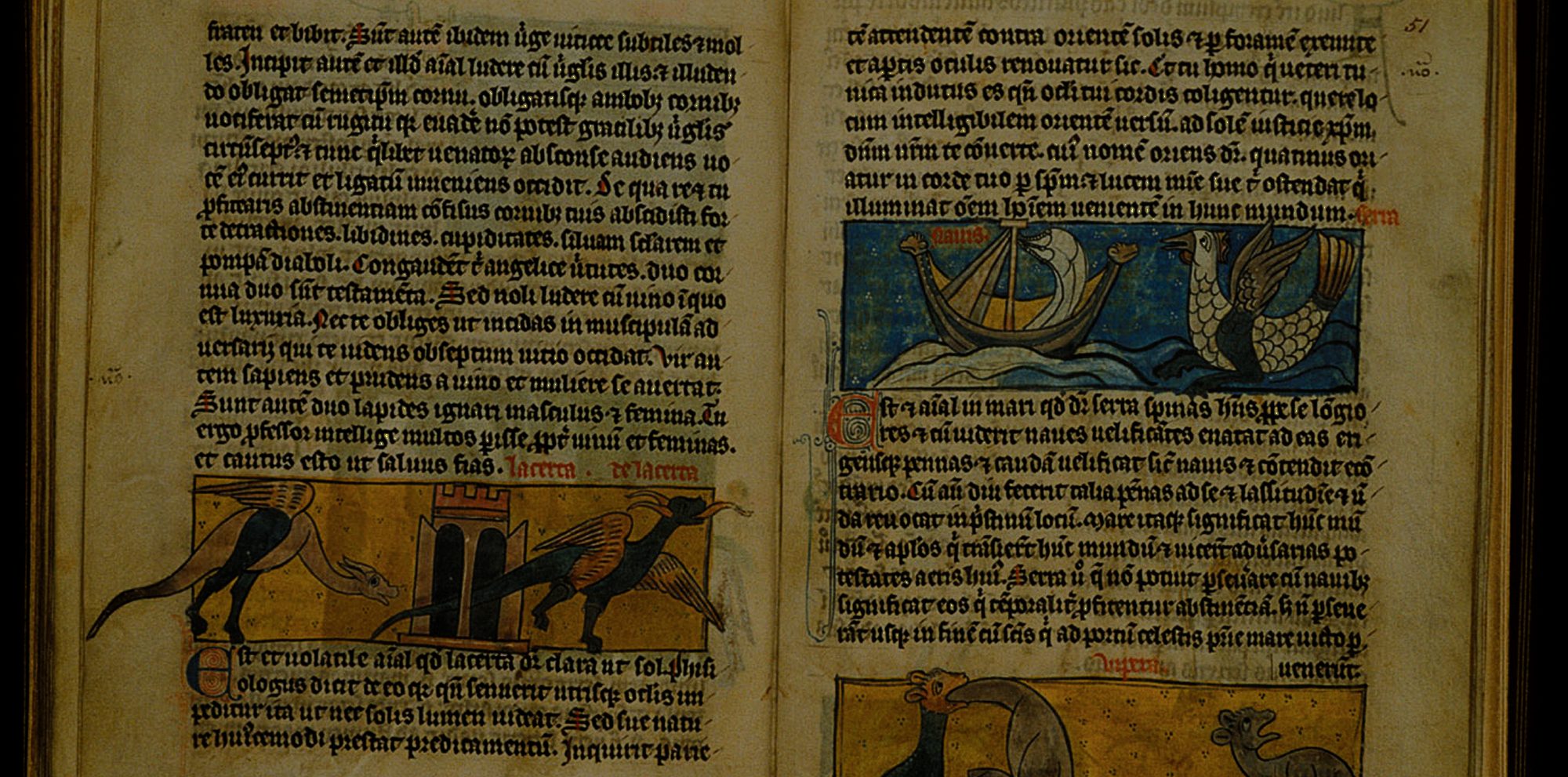
“In short, trickster is a boundary-crosser. Every group has its edge, its sense of in and out, and trickster is always there, at the gates of the city and the gates of life, making sure there is commerce. He also attends the internal boundaries by which groups articulate their social life. We constantly distinguish — right and wrong, sacred and profane, clean and dirty, male and female, young and old, living and dead — and in every case trickster will cross the line and confuse the distinction. Trickster is the creative idiot, therefore, the wise fool, the gray-haired baby, the cross-dresser, the speaker of sacred profanities… Trickster is the mythic embodiment of ambiguity and ambivalence, doubleness and duplicity, contradiction and paradox… There are also cases in which the trickster creates a boundary, or brings to the surface a distinction previously hidden from sight… Boundary creation and boundary crossing are related to one another, and the best way to describe trickster is to say simply that the boundary is where he will be found — sometimes drawing the line, sometimes crossing it, sometimes erasing or moving it, but always there, the god of the threshold in all its forms.”
Hyde 1998, 7-8
Trickster as an Archetype
The trickster figure of mythology and folklore has been named and constructed as a category by nineteenth-century anthropologists of the West. Characters of myth who are simply tricky or cunning might not fit this archetype; this category is limited to masters of trickery and deceit, who in their very make-up and mythological careers are tricksters, existing in the in-between (Hyde 1998, 7-8). The creation and implementation of such a category immediately raises questions of universality and etic misunderstandings of local myth and folklore. Because this archetype was formed in the world of western, male, colonial academia, how might the category of “trickster” be limited and problematic? Is it helpful or even possible to fit the characters of folklore from vastly different and diverse cultures into such a category?
While there are certainly limits and issues with the archetype of trickster — ones that will be explored here — there are also merits in creating and analyzing archetypes such as trickster to use as tools to understand local folklore in new and deeper ways. It should be noted, however, that this archetype is only useful as a tool when the folklore and characters it is labeling have been understood first emically and in local terms, and then through the lens of the trickster archetype.
As this project has first looked at the fox spirit tales as they are understood locally in China, we now move to look at trickster figures in East and Southeast Asian folklore and whether or not Chinese fox spirits can be conceived of as trickster.
What makes a Trickster?
Lewis Hyde’s Trickster Makes This World (1998), an extensive analysis of the trickster archetype, is the foundation on which my analysis stands. Below are the core characteristics of Trickster as outlined by Hyde:
Culture Hero:
Trickster the culture hero helps to define the boundaries of social actions and cultural norms by breaking those norms. As trickster exists in a perpetual state of in-between and contradiction, it is not surprising that as culture hero, trickster creates something of a paradox: “that the origins, liveliness, and durability of cultures require that there be space for figures whose function is to uncover and disrupt the very things that cultures are based on” (9). The culture hero simultaneously challenges and upholds cultural stability.
Appetite:
Appetite can be understood as the body’s needs, which is most importantly hunger, but also includes appetites of the sexual nature. Hyde focuses heavily on the connection between intelligence and appetite inherent to the trickster figure. “Trickster’s intelligence springs from appetite in two ways; it simultaneously seeks to satiate hunger and to subvert all hunger not its own” (22-23) It is the character’s appetite in the myth that leads to their unique cunning and deceptiveness. This notion of appetite also points to the “tension between predators and prey. Behind trickster’s tricks lies the desire to eat and not be eaten, to satisfy appetite without being its object” (37-38).
Adaptiveness and Creative Lying:
The trickster’s nature is inherently mobile and without place, home, or stability, which allows for an adaptiveness and durability not possible for stable, centrally-located figures in myth. “Having no way, trickster can have many ways. Having no way, he is dependent on others whose manner he exploits, but he is not confined to their manner and therefore in another sense he is more independent” (45). Through this independence and adaptiveness, “trickster discovers creative fabulation, feigning, and fibbing, the playful construction of fictive worlds” (45).
Changing Their Skin / Transformation:
Deception is a key feature of the trickster, which often takes the form of disguise. Hyde calls such disguises the changing of the trickster’s skin. The changing of their skin can manifest in two different ways: “sometimes tricksters alter the appearance of their skin; sometimes they actually replace one skin with another” (51). Another name for this would be the trickster’s ability to shape-shift or transform. This transformation is often integral to the success of the trick.
Due to the trickster’s role of boundary creator and destroyer, we can view trickster as “the archetype who attacks all archetypes. He is the character in myth who threatens to take the myth apart.” (Hyde 1998, 14) Trickster acts within the myth as a character who provides plot and entertainment, but also acts outside of the myth in the real, social world as a creator, maintainer, transformer, and destroyer of cultural norms and boundaries.
Trickster Figures of Asia
“Probably every ethnic group in the world has its own set of tales about a trickster, a cunning person or animal that outwits an opponent nine times out of ten. In Europe he is Reynard the fox; in East Africa, Kalulu the hare; in West Africa and the Caribbean, Anansi the spider; in the southern United States, Brer Rabbit; and in the various states of Malaysia, a mouse-deer. For the Kayah of Burma, he is a rabbit called Se-ye; for the Naga, a man called Sisaw and for the Chin and Lisu respectively, the men are called Hsuang-kwaint and Hwa-sa-ha… However low-down the practices of these confident tricksters, we are usually won over by their quick thinking, their ingenuity and their bravado.”
Abbott & Han 2000, 219
Looking at trickster figures in the folklore and legends of Malaysia, Indonesia, Burma, and China, it is clear that while each trickster character is different in name and form, they share heavy similarities in theme and actions. These trends can likely be drawn from the Indic traditions and influences that spread with Buddhism out of India and into these regions. For instance, when studying the mouse-deer trickster of Indonesia, R.B. Dixon, while rooted in problematic ethnographic work, “affirms the tale to be present in the other parts of South-east Asia which had been in close contact with India” (McKean 1971, 78). While the trickster archetype has been constructed out of Western anthropology, it is clear that there is an archetype needed to describe the cunning, tricky characters of many different East and Southeast Asian folklore that share many similarities and causal connections with one another.
In Malaysia, Indonesia, Burma, and China, most of the well-known trickster tales are about cunning, but weak animals. In Malaysia and Indonesia the most famous is the mouse-deer — Kantjil in Malayo-Indonesian (McKean 1971) and Sang Kancil in Malay (Peow 2016); in Burma the rabbit Se-ye or Kyong-si, the sparrow (Abbott & Han 2000); in China the rat or rabbit are usually trickster animals (Peow 2016). It is an underlying theme in these animal trickster tales for the tricksters to be “small and weak animals, and, if not for their intelligence, they would easily be the prey and meal of other stronger animals. In a sense, the tricksters are models of how a small and weak but intelligent person can defeat strong, powerful and evil persons. This is also true in the case of human or supernatural tricksters because they are often at a weaker position than their enemies” (Peow 2016, 63). The largest underlying theme from these trickster tales is the idea that a figure — animal or human — who has little power socially or physically against the power of a social system or individual is capable of overcoming this disadvantage through the power of their mind, cunning, and deceptiveness.
This survival-like quality of the trickster in Asia, or in the regions thus mentioned, is important when we begin to think about gender and fox spirits in terms of the trickster archetype.
Fox Spirits as Trickster
“All tricksters are ‘on the road.’ They are the lords of in-between. A trickster does not live near the hearth; he does not live in the halls of justice, the soldier’s tent, the shaman’s hut, the monastery. He passes through each of these when there is a moment of silence, and he enlivens each with mischief, but he is not their guiding spirit. He is the spirit of the doorway leading out, and of the crossroad at the edge of town (the one where a little market springs up). He is the spirit of the road at dusk, the one that runs from one town to another and belongs to neither.”
Hyde 1998, 6
As was discussed on the main Chinese Fox Spirit page, foxes and fox spirits in China exist in liminality, the in-between. The quote above describing the liminality of Trickster sounds eerily similar to Ji Yun’s descriptions of Chinese foxes (a quote also given in the StoryMap):
“‘Humans and beasts are different species, but foxes are between humans and beasts. The dead and the living walk different roads, but foxes are between the dead and the living. Transcendents and monsters travel different paths, but foxes are between transcendents and monsters. Therefore one could say to meet a fox is strange; one could also say it is ordinary.’”
Huntington 2003, p. 1 & 73
These separate descriptions about trickster and fox spirits, respectively, are vital to understanding each, but what does it mean when they are so similar? It doesn’t necessarily mean that fox spirits are trickster, but it certainly points to areas of overlap. We will use the framework presented above by Hyde (1998) to investigate this overlap to determine the extent to which fox spirits are trickster.
Culture Hero:
In what ways do fox spirits, or the stories of fox spirits, create and break cultural norms in China? Due to the dynamics of gender and class within the stories and outside the stories with authors, audiences, and socio-political environments, there can be a lot said about fox spirits as cultural hero trickster. For one, female foxes and their human forms within the stories uphold Chinese cultural expectations and moral codes of chastity versus promiscuity or deviance (Huntington 2003). The male-dominated cultural norms such as chastity, fear of feminine sexuality, and male superiority and domination can be seen within the stories and explained when looking at who is authoring anthologies of zhiguai and fox lore (see main “Chinese Fox Spirits” page for more on authors and audience) (Huntington 2003). In other ways, however, the female fox spirits within the stories seem to be reclaiming control and power from this male-dominated narrative through stories of revenge and retribution. The supernatural powers foxes have and how those powers blend with feminine sexuality are in many ways subverting the male-dominated cultural norms. In this way, fox spirits and the stories on them seem to be both upholding cultural norms such as gender norms, while also challenging them.
Appetite:
The most applicable aspect of trickster appetite to fox lore in China seems to be the tension between predator and prey. Trickster figures in folk lore, particularly animal folklore in Asia, are often weaker characters that overcome physical or social disadvantage through cunning and trickiness (Hyde 1998; Abbott & Han 2000). Looking at the predominance of fox spirits as women, particularly sexualized women, might we adopt this model of prey versus predator to incorporate gender oppression wherein women are socially constructed and culturally understood as weaker and under the control of men and men are predators who have superiority over women. In many of the stories within the StoryMap on our home Chinese Fox Spirit page there are examples of foxes in the role of temptress or seductress testing the constitutions of men. If we see appetite here as sexual appetite more than the food/hunger appetite that Hyde is focused on, fox spirits seem to embody that of the trickster archetype. As described above, trickster “simultaneously seeks to satiate hunger and to subvert all hunger not its own,” (Hyde 1998, 22). Fox spirits have their own agendas and desires, and in order to achieve them they must navigate the agendas and desires of men, which in most stories means navigating male sexual appetite. By provoking, controlling, or restricting male sexuality through supernatural powers or cunning, female fox spirits are overcoming the role of prey that human women have been assigned.
Adaptiveness and Creative Lying:
Fox spirits are liminal beings and they are highly individualistic. Like humans, fox spirits cannot ever be defined as one thing, though they may share qualities. In the stories shared in our StoryMap, it is clear that fox spirits act in many different capacities, and have the ability to adapt to many situations, because they are not bound to place, physical form, human society, or character.
Changing Their Skin / Transformation:
This is one of the most obvious areas in which the trickster figure and fox spirits share the ability to shape shift. However, this obvious similarity does not mean that fox spirits, because of their ability to transform into humans, are trickster. In fact, the ability to change shape does not stem from a desire to trick, but rather an ability to transcend and accomplish spiritual achievements such as the Daoist Way (Huntington 2003). Sometimes fox spirits use their transformation to deceive or trick, but trickery is not inherent to their shape-shifting capability, rather it can be used to trick if the individual fox chooses.
It might be said that because fox spirits are such individualized and complicated beings, they cannot fully embody the often simplistic nature of a trickster figure. Despite being able to see fox spirits under the lens of trickster in the framework above, fox spirits are not one thing and therefore seem to break the mold of trickster. The trickster archetype insists on the folk figure being inherently trickster, having a career of deception (Hyde 1998). Foxes and the stories about them are incredibly diverse, making this one archetype impossible to fit onto all fox spirits. Fox spirits certainly can embody trickster characteristics and in certain stories might fulfill this archetype, but looking at these beings in total, no one archetype could fit them. But perhaps the fox spirits’ ability to break folklore archetypes makes them trickster in and of themselves.
Bibliography
Abbott, Gerry. 2000. The Folk-Tales of Burma : An Introduction. Leiden ; Brill.
Huntington, Rania. 2003. Alien Kind: Foxes and Late Imperial Chinese Narrative. Harvard East Asian Monographs, 222. Cambridge, MA: Harvard University Asia Center.
Hyde, Lewis. 1998. Trickster Makes This World: Mischief, Myth, and Art. New York: North Point Press.
McKean, Philip Frick. 1971. “The Mouse-Deer (‘Kantjil’) in Malayo-Indonesian Folklore: Alternative Analyses and the Significance of a Trickster Figure in South-East Asia.” Asian Folklore Studies 30 (1): 71–84.
Mills, Margaret A. 2018. “Afghano-Persian Trickster Women: Definitions, Liminalities, and Gender.” Marvels & Tales 32 (1): 33–58.
Peow, See Hoon. 2016. “A Comparative Study of Malay and Chinese Trickster Tales: Sang Kancil, the Rabbit and the Rat 1.” Kajian Malaysia; Pinang 34 (2): 59–73.
Page written and created by Billie D-M., Chloe W., and Lydia M.
