Bigfoot, Yeti, Yowie…
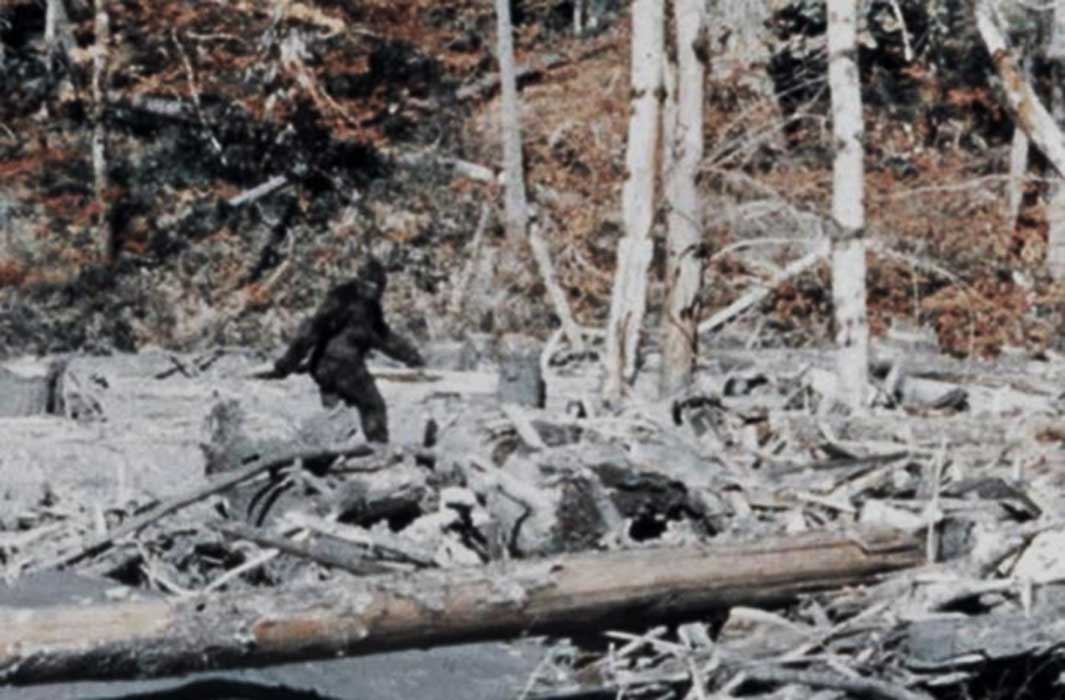
Whether or not you believe in them, you’ve almost certainly heard of at least one of them. North America’s Bigfoot, the Himalayan Yeti or abominable snowman, and Oceania’s Yowie are all hairy ape-like creatures which resemble and move like men, but stand much taller.
Whether or not you believe in these beings, it is hard to deny the massive impact they have had on popular culture, as well as our subconscious. Harry and the Hendersons (1987) portrayed Bigfoot as a kind-hearted loner. He has also served as the monster or enemy in many horror films. A Sasquatch has become the unofficial mascot of Jack Links beef jerky and has been featured in multiple televised adverts.
This idea of a hairy hominid hiding in the forests or mountains, undiscovered by science, did not come out of no where. There is a massive and diverse array of alleged modern encounters with Bigfoot creatures collected in books, documentaries, and on the internet. For decades, these creatures were seen as the “missing link” or simply an undiscovered hominid. Now there is more of a shift away from flesh and blood theories about these beings and more people are considering that they may have some spiritual importance or posses capabilities beyond our comprehension.
Folklore and Religion
Wildmen lore dates back far past the colonial era and the original experiences with them come from much older tales than those of Westerners. Many indigenous peoples speak about tall hairy creatures which resemble themselves. Their knowledge comes from stories and legends passed down for centuries, or from their own personal experiences. When studying these creatures from the perspective of natives, it becomes clear that Bigfoot, Yeti and Yowie are all potentially deleterious terms, because they unduly imply a degree of similarity between them. These stories speak of creatures with a wide variety of attributes and behaviors, as well as a wide variety of implications to those to whom the stories belong. It can’t be ruled out that they are the same creature, however there are so many differences between them that it would not be a fair assumption.
We are hoping to explore what makes the Yeti, Yowie, and Bigfoot different from each other, and whether comparing them gives any valuable insight into their nature, or if comparison is not actually fruitful. We will use guidelines from Religious scholar Jonathan Z. Smith and our own research to determine if comparison is useful when discussing these creatures.
STORYMAP
Comparison Between Beasts
Given the ubiquity of wild-men, “near-men”, and other characteristically humanoid beasts in the folklore and legends from cultures across the globe, it can be said conclusively that the human imagination has an affinity for stories of beings that are similar to but not quite the same as ourselves. At the same time, though these stories pervade across cultures from virtually every continent, a comparison between any two individual stories becomes a comparison between two disparate cultures. The more we examine these tales and accounts, the more differences we uncover as the author of the story’s culture changes from place to place and story to story.
Methodology
The nature of Bigfoot and related ‘cryptid’ creatures creates a complex research method, specifically when proof is not instrumental to our project. That is, most scholarly or viable publications about Bigfoot, the Yeti, or the various Yowies, are focused on science and proving or disproving the existence of these creatures. In our project we are not accepting or denying the existence of Bigfoot, the Yeti, or the Yowie, but are exploring their natures in tandem with each other. This makes finding viable sources difficult. We are not basing our research on existing stereotypes or what we know ourselves from popular culture depictions of these beasts, but from what we have read and researched about. We are accepting some anecdotal evidence and descriptions as well as what we can find from folklore. The problem with folklore is that it does get relayed person-to-person — this is problematic, especially in the case of the Yowie, where white Australians or New Zealanders are telling stories they hear from people native to Oceania.
Our method of comparison is derived from that of religious historian Jonathan Z. Smith. We pulled from him a couple of directives, but focused specifically on the straightforward guideline: Comparison should be an awareness of differences, not of similarities, as is common in comparison (Smith 26). With this in mind, we have learned about these creatures (Bigfoot, Yeti, and Yowie) morphologically and behaviorally to understand them individually, and to compare them. This method is to serve the question: does understanding one creature reveal information about another?
Comparison in Action
Being informed about Bigfoot is not a viable way to be informed about the Yeti or various Yowie creatures. Even knowing about Bigfoot does not inform the variations of tales about the North American hominid itself. Within the categories of Bigfoot, Yeti, and Yowie, there is deviation in behavior, lifestyle, interaction with humans, and morphology. For example, some descriptions of Bigfoot imply that it is a solitary creature, or the only one of it’s kind. Whereas some tales of the Yowie imply that the nature of the animals is that of a ‘pack’ or family group. Yeti are either solitary or paired, but many exist. These are three fundamental differences between them, and do not inform each other in any way.
If one looks beyond the three creatures highlighted in our work and into the multitude of other characteristically humanoid creatures of legend in other parts of the world, the differences become even more rampant. Some are a mere two feet tall, some have backward pointing feet or inverted knees, some even ride horses or wear straw hats. Though the theme of hairy, ape-like hominid pervades, no two tales are all together similar.
A common thread between these creatures is their communication (whistles, screams), their scent (foul), and their appearance. Even then, the only definitive similarity is their abundant hair and large size. To compare them would only make them more confusing than they already are, as there are so many differences between them. What leads one to comparison is their mystery, which shall remain.
Works Cited
Bigfoot on the way west. (2012, May 27). Idaho State Journal Retrieved from http://ezproxy.guilford.edu/login?url=https://search.proquest.com/docview/1016572488?accountid=11235
Capper, D. (2012) The Friendly Yeti. “Journal for the Study of Religion, Nature and Culture.” (71-87)
Choden, K. (1997) “Bhutanese Tales of the Yeti.” (Bangkok: White Lotus Company)
Fusch, E. (2002) S’cwene’y’ti and the Stick Indians of the Colvilles: The Interaction of Large Bipedal Hominids with American Indians (Riverside, Washington: Ed Fusch, 2nd ed.) Hosted by Bigfoot Encounters: http://www.bigfootencounters.com/biology/fusch.htm
Mathews, R. H. (2007) A Giant in a Cave — An Australian Legend, originally published in: American Antiquarian vol.29 (1907) republished in: Culture in Translation: The anthropological legacy of R. H. Mathews (Canberra: ANU press) 139-141
Kirtley, B F. (1964) Unknown Hominids and New World Legends. (Western Folklore: Western States Folklore Society)
Mathews, R. H. (1905) Ethnological Notes on the Aboriginal Tribes of New South Wales and Victoria (Sydney: F.W. White) 159-161
Milligan, L. (1990) The “Truth” About the Bigfoot Legend. (Western Folklore: Western States Folklore Society)
Native Languages of the Americas. Legendary Native American Figures: Seatco (Siatco)http://www.native-languages.org/morelegends/seatco.htm
Robinson, R. (1968) Aboriginal Myths and Legends (Melbourne: Sun Books) p. 211-212
Rose, D. B. (1996) Nourishing Terrains: Australian Aboriginal Views of Landscape and Wilderness (Canberra: Australian Heritage Commission)
Suttles, W. (1987) Coast Salish Essays (Vancouver: Talonbooks) Hosted by Bigfoot Encounters: http://www.bigfootencounters.com/legends/boqs.htm
Page written and created by Caleb B., Julia D., and Luke B.
